
Moving to Portugal with pets is a documented process with a fixed sequence, and getting the order wrong is the most common reason animals are turned away at the border.
The rules changed in April 2026, so in this article, you’ll find which route applies to your animal, what identification and health documentation you need before you book anything, and how airline and carrier preparation works.
You’ll also find out what happens at the Portuguese border, and what you need to do once you arrive.
Moving to Portugal with Pets: Key Takeaways


Yes, if your animal is a dog, cat, or ferret, if it meets the identification and health requirements that apply to the country you’re traveling from, and if the move is non-commercial.
Non-commercial means the animal travels with you or a person you’ve authorized and isn’t being sold or transferred to a new owner upon arrival.
If ownership changes hands, commercial import rules apply instead, and those are a different process with different paperwork.
Only dogs, cats, and ferrets fall under the EU pet movement rules. Rabbits, birds, fish, and reptiles don’t.
Each country sets its own conditions for those species, so if you’re moving with an animal outside the three covered species, you need to confirm the position with Portuguese authorities directly before you commit to a travel date.
You can move up to five animals under these rules. Above five, you’re into commercial import conditions unless the animals are traveling to a competition, exhibition, or sporting event, in which case they must be over six months old and registered with the organizing body.
Which route applies to your pet
Two things determine your route. The first is whether you’re traveling from another EU country or from outside the EU. The second, if you’re outside the EU, is which list your country of departure sits on.
If you’re moving from another EU country, your animal travels with an EU pet passport that records a valid rabies vaccination. That’s the simplest route, and it doesn’t require a health certificate or a designated entry point.
If you’re moving from outside the EU, you need an animal health certificate and a written declaration confirming the movement is non-commercial.
Whether you also need a rabies antibody test depends on your country of departure. Countries with recognized rabies control, including the United States, Canada, Australia, and Japan, are exempt from the test. Countries not on either list require it, and the test adds around three months to your timeline.
What changed in April 2026
The old rules under Regulation (EU) 576/2013 were replaced by Commission Delegated Regulation (EU) 2026/131. The health certificate model has changed; the microchip technical specification now sits under different legislation, and the validity period for onward travel within the EU is now six months instead of four.
There’s a transitional deadline you need to know about if you’re traveling soon. Animal health certificates drawn up under the old 2013 model remain valid only if issued before 1 October 2026.
If your veterinarian issues a certificate after that date, it has to be the current model. Confirm with your issuing vet which version they’re using.

The order of these steps is fixed, and it’s where most problems start. Your animal is microchipped first, then vaccinated against rabies. If a rabies antibody test applies to your route, that comes third.
Nothing counts if it happens out of sequence, and there’s no way to correct it retroactively. A vaccination given before the microchip is invalid, and your veterinarian has to start again.
Work backward from the date you want to travel. From a country that requires the antibody test, the full sequence takes around four months.
From a country that doesn’t, you’re looking at a minimum of 21 days after vaccination before your animal is eligible to move, and longer if the animal is young.
Microchip requirements for pets entering Portugal
Your animal must carry a microchip that meets the EU technical standard, which means an ISO 11784- and 11785-compliant transponder with a 15-digit code readable by a standard scanner. The specification is set out in Article 70a of Delegated Regulation (EU) 2019/2035, as amended.
Non-ISO chips, including some chips implanted in the United States before ISO adoption became standard practice, can’t be read by Portuguese border scanners. If you’re unsure which chip your animal carries, ask your veterinarian to scan it and confirm the format before you do anything else.
A tattoo is accepted in place of a microchip only if it was applied before 3 July 2011 and remains clearly legible. Anything tattooed after that date doesn’t satisfy the identification requirement.
Refusals at the Portuguese border are rarely complicated. The most common cause is a mismatch between the chip number on the paperwork and the number actually implanted in the animal; even a single transposed digit is enough.
The second most common is a chip that can’t be read during inspection, either because it has migrated from the implant site or because it isn’t ISO-compliant.
Check the number yourself against every document before you leave, and if your animal’s chip is more than a few years old, ask your vet to confirm it still scans.
Rabies vaccination and antibody testing
The rabies vaccination must be given by an official or authorized veterinarian, and three conditions apply:
- The animal has to be at least 12 weeks old on the date the vaccine is administered.
- The vaccination date can’t precede the date the microchip was implanted or read.
- The vaccination isn’t valid until 21 days after the primary course is completed.
A puppy or kitten vaccinated on the day it turns 12 weeks old isn’t eligible to enter Portugal until it’s around 15 weeks old. If you’re planning to move a young animal, build that into your timeline rather than assuming 12 weeks is the threshold.
The rabies antibody titration test applies only if you’re traveling from a country that isn’t on the EU’s recognized lists.
Where it applies, the blood sample must be taken by an authorized veterinarian at least 30 days after the primary vaccination and no less than 90 days before the date your animal health certificate is issued.
The sample goes to a laboratory designated for this purpose; the result must show a neutralizing antibody level of at least 0.5 IU/ml, and the laboratory’s official report must be attached to the certificate that travels with your animal.
The 90-day wait is the longest fixed delay in the process and cannot be shortened.
Once your animal has a satisfactory result, you don’t need to repeat the test as long as you keep revaccinating within the validity period of the previous vaccination.
Arriving from an EU country
This is the shorter route. Your dog, cat, or ferret travels with an EU pet passport that includes a current rabies vaccination recorded by a veterinarian. You don’t need an animal health certificate, and you don’t need to enter through a designated point of entry.
The passport must have been issued in an EU country, and the rabies vaccination recorded in it must be valid on the day you travel. If the vaccination lapsed and was restarted, the 21-day waiting period applies again from the start of the new primary course.
One additional requirement catches people routing through Europe. If your journey takes your dog into Finland, Ireland, Malta, Northern Ireland, or Norway before reaching Portugal, the dog needs treatment against the tapeworm Echinococcus multilocularis, administered by a veterinarian between 24 and 120 hours before scheduled entry and recorded in the passport.
This doesn’t apply to cats or ferrets, nor to direct travel to Portugal.
Arriving from outside the EU
If you’re bringing your dog to Portugal from the United States, Canada, Brazil, the United Kingdom, or anywhere outside the EU, you need three things in addition to the identification and vaccination.
The first is an animal health certificate issued by an official or authorized veterinarian and then endorsed by the competent authority in your country.
In the United States, that endorsement comes from USDA APHIS. The certificate records the microchip code, rabies vaccination details, and, where applicable, blood sampling details, and confirms that your animal is fit to travel.
The second is a written declaration, completed by you or by the person you’ve authorized, confirming that the movement is non-commercial.
The third is passage through a designated traveler’s point of entry, where Portuguese authorities conduct documentary and identity checks.
A small group of countries is exempt from this requirement, including Switzerland, Norway, Iceland, Andorra, San Marino, Monaco, Gibraltar, Greenland, the Faroe Islands, Liechtenstein, and Vatican City.
Everywhere else, including the United States and the United Kingdom, has to use a designated point.
Your animal doesn’t have to travel on the same flight as you, but it does have to travel close to it. If an authorized person transports the animal instead, you need to travel either within five days before or after it, and a written declaration must confirm this.
If the animal moves independently of your own travel, it stops being a non-commercial movement, and commercial import rules apply.

The EU pet passport
The EU pet passport is a booklet issued by a veterinarian in an EU country. It records your animal’s identification, its rabies vaccination history, and any treatments given.
It’s valid for the animal’s lifetime, provided the rabies vaccinations recorded in it stay current.
You can only get one if you’re a resident in an EU country, or if you’re traveling from one of a small group of listed non-EU territories.
If you’re relocating from the United States, Canada, Brazil, or the United Kingdom, you can’t obtain an EU pet passport before you leave. You’ll travel on a health certificate instead, and you can then have a Portuguese veterinarian issue a passport once you’ve arrived and settled.
Older passport models remain valid. A passport issued under the 2003 model before 29 December 2014, or under the 2013 model before 22 April 2026, still works for the animal’s lifetime when traveling from a listed territory. If you already hold one, you don’t need to replace it.
The animal health certificate
If you’re arriving from outside the EU, this is the document that gets your animal in. The current model is set out in Annex III to Commission Implementing Regulation (EU) 2026/705.
It’s completed and issued by an official or authorized veterinarian, and then endorsed by the competent authority in your country.
Timing is tight and frequently misjudged. The certificate is valid for 10 days from the date the official veterinarian issues it until the date of the documentary and identity checks at your point of entry in Portugal.
If you’re traveling by sea, that 10-day window extends by the length of the sea crossing. Book your veterinary appointment close enough to your travel date that the certificate is still live on arrival, but not so close that a delay in the endorsement leaves you without it.
Once your animal has cleared checks in Portugal, the same certificate covers onward movement into other EU countries for six months from the date of those checks, or until the rabies vaccination expires, whichever comes first.
Note that this is six months, not four. The four-month figure appeared under the previous rules and is still widely repeated on veterinary and relocation websites.
There’s a transitional deadline that matters if you’re traveling in the next few weeks. Certificates issued under the old 2013 model remain valid only if they were issued before 1 October 2026.
After that date, your veterinarian has to use the current model. Ask which version they’re issuing, because a vet who handles pet exports infrequently may still be working from the old template.
The written declaration
Alongside the health certificate, you need a written declaration confirming the movement is non-commercial. You complete it yourself, or the person you’ve authorized to travel with the animal completes it. It’s short but not optional, and the model form is published with the certificate legislation.
If someone else is transporting your animal, this declaration also confirms the five-day travel window. You need to travel within five days either side of the animal for the movement to stay non-commercial.
Keep everything after you arrive
Don’t file these documents away and forget them. You’ll need the identification and vaccination records to register your animal with a Portuguese veterinarian, and the microchip number to complete the national registration.
Portugal pet travel by air divides into two arrangements, and which one applies to your animal is decided by the airline, not by you.
Small animals in a soft carrier that fits under the seat may travel in the cabin. Larger animals travel in a pressurized, temperature-controlled section of the hold, in a rigid crate.
Airlines set their own weight thresholds, limits on how many animals are allowed per flight, and booking deadlines, and these differ enough between carriers that a route that works with one airline may not work with another.
Book the animal’s place at the same time you book your own seat, or before it. Airlines cap the number of animals per flight and per cabin, and those places fill early on popular routes. On some carriers, you can’t add an animal to an existing booking at all.
What to confirm with your airline before booking
Ask these questions of the specific airline for the specific route on your travel date. Published policies change, and a carrier’s website may not reflect a seasonal restriction.
- Which species are accepted, and whether ferrets are accepted at all, since several airlines carry dogs and cats but not ferrets
- The weight limit for cabin travel, measured with the animal inside the carrier
- The maximum carrier dimensions for cabin travel on that aircraft type
- Whether the hold is available on your route, and whether it’s available in the month you’re flying
- Temperature embargoes, which suspend travel during hot or cold periods, are a common cause of canceled plans
- How connections are handled, whether the animal is retrieved and rechecked, and the minimum connection time required
- The booking deadline for reserving the animal’s place
- What the airline charges, and whether it’s charged per leg or per journey
Temperature embargoes deserve particular attention if you’re moving in summer. Arrival airports in Portugal get hot, and departure airports in the southern United States or the Gulf may be hotter.
An embargo at either end can ground a booking made months earlier, so ask about it directly rather than assuming your date is safe.
Crate requirements
Neither the European Union nor Portugal’s Direção-Geral de Alimentação e Veterinária (DGAV) sets crate specifications. Those come from the International Air Transport Association’s Live Animal Regulations, which most airlines apply as a minimum standard.
An IATA-compliant container is rigid, constructed from fiberglass, metal, rigid plastic, solid wood, or plywood, and has a smooth interior with no sharp edges.
The animal must be able to stand fully upright, sit, lie in a natural position, and turn around comfortably. Ventilation is required on all four sides. At least one door has to form an entire end of the crate.
You’ll also need leak-proof, absorbent bedding; a water container fixed inside and fillable from the outside; and clear, live-animal labeling on the exterior.
Airlines routinely require more than the IATA minimum. Some specify metal hardware rather than plastic clips, some require cable ties at the corners, and some measure the animal themselves at check-in and refuse a crate they judge too small.
Confirm the exact specification with your carrier, and buy the crate early enough that your animal has weeks to get used to it rather than meeting it for the first time at the airport.
Alternatives to flying
Flying isn’t the only route, and for some animals, it isn’t the best one.
Driving works if you’re relocating from a nearby location, such as the United Kingdom or Switzerland. You cross into the EU at a land or ferry entry point, complete the checks there, and continue to Portugal. Every entry requirement still applies.
The identification, vaccination, and certificate are all the same, and if you’re arriving from outside the EU, you still need to present them at a designated entry point.
Sea transport is available on a small number of transatlantic passenger routes that offer kenneling, where the animal travels in a designated kennel area, and you can visit daily.
It’s calmer than flying, which can suit older animals or large dogs, but the routes are few, and they book out well in advance. The 10-day certificate validity period is extended by the duration of the crossing, making the timing more forgiving than it first appears.
If your pets are up to date on their vaccinations and you have a huge amount of paperwork, that is a step in the right direction.
However, that is only a small part of the journey. The correct documentation only allows them to enter Portugal, but you must still get them there.
The most common way to relocate pets to Portugal is by airplane, but this method has its own set of challenges. For example, some airlines allow you to travel with one pet (like cats or small dogs) in the cabin with you, but the carrier must be small enough to fit under your seat, and with your pet inside, it can’t weigh more than 8kg.
The other method for cats and dogs larger than that is transporting them in a specialized crate. The requirements of the crate are not determined by the European Union or Portugal’s Directorate-General for Food and Veterinary Affairs (DGAV).
However, they are under the jurisdiction of the International Air Transport Association’s (IATA) Live Animal Regulations, and the specifications for an IATA-compliant container are:
- Must be rigid and constructed from fiberglass, metal, rigid plastic, solid wood, or plywood
- Interior must be smooth with no sharp edges
- A pet must be able to stand up fully, sit and lie in a natural position, and turn around comfortably
- It must have ventilation on all four sides and must be at least 16 percent of the container surface
- At least one door must form one entire end of the crate
Additionally, there are sanitary requirements. For example, you must provide leak-proof absorbent bedding, a water container must be affixed inside, and clear labels must be placed outside to indicate that live animals are inside.
It’s important to remember that these are the minimum regulations from IATA, and airlines might have their own additional requirements.

Arriving from outside the EU, your animal must enter through a designated point of entry for travelers, where DGAV staff conduct documentary and identity checks.
You’re required to contact the competent authority at the point of entry upon arrival. The animal isn’t cleared automatically alongside your own passport control.
The check itself is straightforward. An official scans the microchip, reads the code, and compares it against the code written on the health certificate.
They review the vaccination record, the antibody test report, where applicable, and the written non-commercial declaration. If everything matches and the certificate is still valid for 10 days, the animal is cleared.
If something doesn’t match, the options are limited, and none of them are cheap. Depending on what’s wrong, the animal may be held pending correction, returned to the country of departure at your cost, or placed in quarantine.
This is why the microchip number is worth checking digit by digit before you leave, and why the certificate date matters.
Where you can enter
DGAV designates entry points across the mainland, Madeira, and the Azores, and the list covers ports and marinas as well as airports.
As of the list published on 26 March 2026, the mainland airports are Lisbon, Porto, Faro, Beja, and Cascais. Mainland ports are Lisbon, Porto, and Cascais Marina.
In Madeira, Funchal is designated as both an airport and a port. In the Azores, the designated airports are Ponta Delgada, Terceira, and Santa Maria, with entry also available at Ponta Delgada Marina, Angra do Heroísmo Marina, and Vila do Porto Marina
Each point has its own DGAV contact number and email address. If you’re arriving outside standard hours, or at one of the smaller island points, contact them ahead of your arrival rather than assuming someone will be waiting.
Animals arriving from a listed territory, including Switzerland, Norway, Iceland, Andorra, San Marino, Monaco, Gibraltar, Greenland, the Faroe Islands, Liechtenstein, and Vatican City, aren’t required to use a designated point of entry. Neither are animals arriving from another EU country.
Collecting an animal that traveled in the hold
Animals traveling as cargo are offloaded as a priority and moved to the veterinary checkpoint or customs inspection area.
Once checks are complete, you collect the animal at the cargo terminal or a designated pickup point, which is often not the same building as the passenger terminal and may be some distance from it.
Build time into your arrival day for this. The process can take several hours depending on the airport, the time of day, and how many animals arrived on the flight. If you’re connecting to a domestic flight or a long drive, don’t schedule it tightly.
Restricted dog breeds
Portugal classifies seven dog breeds and their crossbreeds as potentially dangerous under Portaria n.º 422/2004, which hasn’t been amended since its publication. The listed breeds are the Fila Brasileiro, Dogo Argentino, Pit Bull Terrier, Rottweiler, American Staffordshire Terrier, Staffordshire Bull Terrier, and Tosa Inu.
Classification follows breed and type, not the individual animal’s temperament or its documentation in another country. A dog registered elsewhere as a Staffordshire Bull Terrier is assessed against the Portuguese list regardless of how it’s described on its paperwork.
For owners of dogs in these categories already resident in Portugal, ownership carries additional obligations under Decreto-Lei n.º 315/2009, as amended, including civil liability insurance, mandatory training, muzzling in public, and sterilization requirements for animals not registered in a recognized studbook.
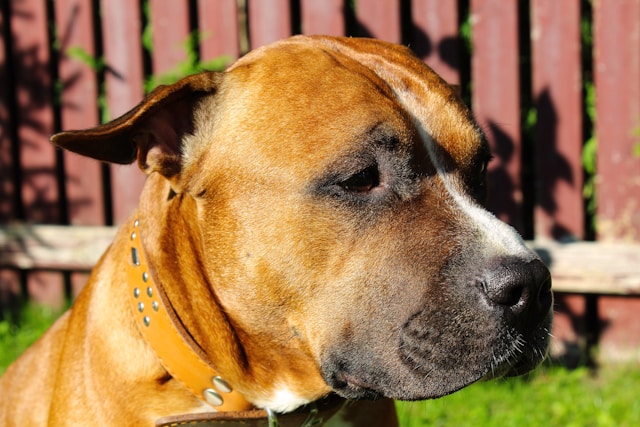
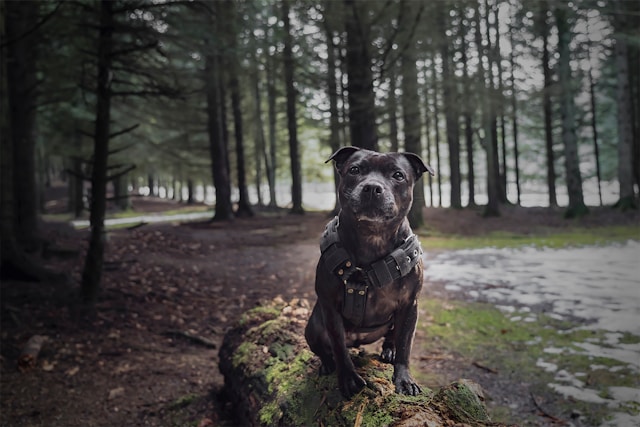

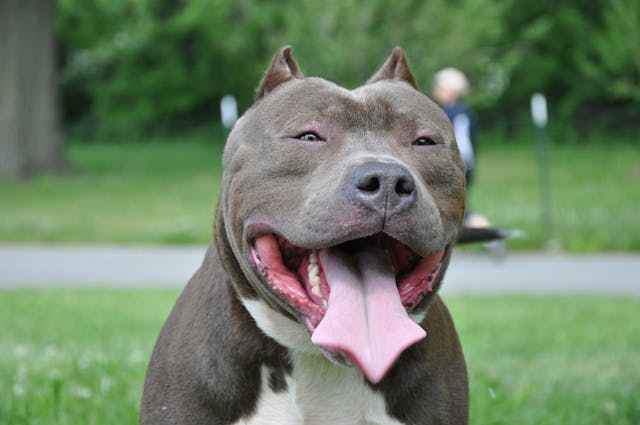


Importing one of these breeds as a resident pet is heavily restricted or outright banned unless the dog has exceptional documentation, training certifications, and possibly a behavioral assessment.
Clearing the border isn’t the end of the process. Portugal requires companion animals to be registered nationally, and there are a few practical things worth doing in your first weeks that make the rest easier.
National registration
Dogs, cats, and ferrets living in Portugal must be registered in the Sistema de Informação de Animais de Companhia (SIAC), the national companion animal database. Registration links the microchip code to you as the owner, with your address and contact details in Portugal.
A veterinarian handles this. Take your animal’s identification documents, its vaccination record, and your own identification and Portuguese address to a local vet, and they’ll complete the registration. If your animal already carries a compliant microchip, it doesn’t need a new one. The existing code is registered rather than replaced.
Do this early rather than leaving it. Registration is the record that establishes your animal is a legal resident and allows it to be identified and returned to you if it’s lost.
Dogs also require a municipal license from the junta de freguesia covering your address. Requirements and fees vary by municipality, so ask your local junta rather than assuming the process matches what you’re used to.
Finding a veterinarian
Register with a local veterinary practice soon after arriving, before you need one urgently.
Beyond routine care, your vet keeps your rabies vaccination current, which matters if you plan to travel within the EU or to leave and return. A lapsed vaccination means restarting the primary course and waiting 21 days again.
If you didn’t arrive with an EU pet passport, a Portuguese veterinarian can issue one once you’re a resident.
This makes subsequent travel within the EU considerably simpler than traveling on certificates each time. It’s worth arranging an early visit rather than in the weeks before a trip.
Ask about the parasite picture in your area. Leishmaniasis is present in parts of Portugal and is transmitted by sandflies; prevention is a standard topic of conversation with local vets.
Tick and heartworm prevention protocols may also differ from those your animal was previously on.
Housing and daily life
If you plan to move a cat or a dog to Portugal, factor the animal into your housing search from the start rather than treating it as a detail to sort out later.
Rental listings vary in whether they accept animals, and in tight rental markets, having an animal narrows your options. Landlords may ask for a larger deposit.
Condominium rules in apartment buildings sometimes restrict animals independently of what the landlord agrees to, so check the building rules as well as the lease.
Portugal is broadly accommodating in daily life. Many cafés and restaurants allow dogs in outdoor areas, and parks and designated beaches are widely available, though beach access for dogs is restricted seasonally in many municipalities.
Public transport rules vary by operator, with small animals in carriers generally accepted and larger dogs subject to muzzling and leash requirements.
Owners of dogs listed as potentially dangerous face additional obligations in daily life, covered in the previous section, and those obligations apply continuously rather than only at entry.
Where relocation planning fits
Moving an animal is one part of a relocation that also involves your own legal status, housing, and timing.
If you’re still deciding on the visa or residency route that brings you to Portugal, that decision sets the timeline from which everything else works backward, including your animal’s vaccination and certificate dates.
- Specialist expertise in Portugal residency planning
- Trusted by 15,000+ clients worldwide
- Over a decade of advisory expertise
- Dedicated relationship manager
- Transparent fees and guidance
- Support beyond approval
