
Lisbon is home to a diverse range of neighborhoods, each offering its distinct charm, features, and amenities. These neighborhoods also boast unique opportunities for investors and expatriates seeking a new home or business venture.
Whether your preference is proximity to major attractions, the tranquility of suburban living, or the charm of coastal towns, the “City of Seven Hills” offers an array of options to suit every taste.
This article compares Lisbon’s main residential areas using the same set of criteria for each one: How you move around, what the terrain demands of you, what daily services are within reach, what kind of housing stock you’ll find, and how much visitor traffic passes through.

There’s no single best neighborhood in Lisbon. The area that works for you depends on what you’re unwilling to compromise on.
If your priority is a short, step-free metro commute, consider Avenidas Novas, Alvalade, Arroios, or Parque das Nações. If you want to be in the historic core and you’re comfortable with steep streets and stairs, consider Alfama, Graça, Bairro Alto, or Príncipe Real.
For river access and more open space, look at Santos, Alcântara, or Belém. Preferring a quiet residential street with local shops and schools close by? Consider Campo de Ourique, Estrela, Alvalade, or Avenidas Novas.
If you’re going to be in and out of the city center on foot every day, Baixa and Chiado put you in the middle of it, with the visitor volume that comes with that.
Transit, terrain, and daily services
Lisbon is built on hills, and the gradient is the single most underrated factor in choosing where to live here. An area can be 15 minutes from your office on a map and still be a difficult daily walk if the route runs up a stepped street.
Metro coverage isn’t even citywide, either. Several central historic areas have no metro station within their boundaries and rely on trams, buses, or a walk to a station in a neighboring area.
Daily services are the third piece. A supermarket, pharmacy, health center, and school within walking distance change how an area functions far more than the number of restaurants on its main street. Check what’s open on a Sunday evening, not just what’s open on a Saturday afternoon.
Housing type and visitor pressure
Lisbon’s housing stock varies sharply by area and by construction period. Historic quarters are dominated by older buildings, often without elevators, sometimes with restrictions on what you can alter.
Districts laid out in the 20th century tend to have larger floor plans, elevators, and parking. Redeveloped industrial areas mix converted buildings with recent construction.
Visitor pressure is the other variable that shifts by street. Some areas carry heavy foot traffic on a handful of routes and are quiet two streets away. Walk the specific block at the times you’d actually be there.

About Lisbon’s property market
Lisbon draws international buyers for reasons that have little to do with any single program or incentive. It’s a capital city with a temperate climate, an international airport near the center, and a housing stock ranging from 18th-century buildings to recent construction.
Portugal’s position within the EU and the Schengen Area matters to buyers who want a base with straightforward access to the rest of Europe.
Pricing compares differently depending on where you’re coming from. Buyers arriving from London, Paris, or Amsterdam often find Lisbon less expensive than the market they’ve left.
So do many buyers arriving from major US cities, which is one reason the city features regularly in the plans of Americans moving to Portugal. Buyers comparing Lisbon to other Portuguese cities usually find the opposite.
One point of confusion is worth clearing up. Portugal’s Golden Visa no longer accepts residential property purchases as a qualifying investment. That changed in October 2023, and buying an apartment in Lisbon doesn’t route you to residency on its own.
If residency is part of what you’re planning, treat the property decision and the residency decision as two separate questions with different criteria. Our guide to Portugal Golden Visa changes and current rules sets out what does and doesn’t qualify now.
Why buy a house in Lisbon?
Buying rather than renting changes which areas make sense, because you’re committing to a building as well as a street. The reasons buyers give most often include:
- Quality of life: A temperate climate, coastline within reach of the city, and a dense cultural calendar
- Housing variety: Historic buildings, mid-century apartment blocks, and recent construction, often within the same district
- Renovation potential: A substantial stock of older properties where the condition of the building is the main variable in the price
- Rental demand: Sustained demand for long-term rentals in residential districts, subject to the licensing rules that apply to your specific address
- Infrastructure investment: Continuing municipal work on transport and public space, with the scope and timing published by the city and the transport operators
Each of these depends on the specific property. A building in poor structural condition on a quiet street can be a worse purchase than a smaller apartment on a busier one.
Average property prices in Lisbon
Prices in Lisbon vary widely by neighborhood, by street within a neighborhood, and by the condition and floor of the individual building. A renovated apartment with an elevator and a river view falls into a different price band than an unrenovated apartment two doors down.
This article doesn’t publish a per-square-meter figure for each area because a figure without a source and a date is misleading.
When you’re comparing areas on price, use a dated dataset and check when it was last published. Ask any agent you work with which dataset their figure comes from and what period it covers. If they can’t tell you, the number isn’t usable.
The 14 areas that follow are grouped into three clusters by location and character. The comparison uses the same three fields for each area, so you can read across them.
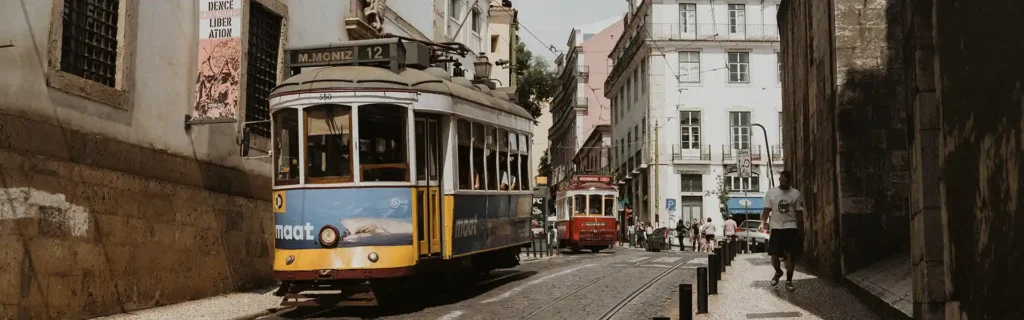
These are the areas inside or immediately around Lisbon’s oldest core. They share a walkable scale, older housing stock, and significant gradient.
Alfama
Alfama is Lisbon’s oldest quarter, laid out long before the 1755 earthquake that reshaped the city center, and largely spared by it. The street plan is medieval: narrow, irregular, and stepped in places.
It’s the home of Fado, and casas de fado still operate through the district alongside the Castelo de São Jorge, the Sé cathedral, and the National Pantheon.
Living here means accepting the terrain. Vehicle access is limited on many streets, deliveries are harder, and the daily climb is real. Tram 28 runs through the district and carries heavy visitor traffic. The Santo António festivities in June bring street parties across the neighborhood.
Pros
- Oldest and most distinctive street fabric in the city
- Concentration of landmarks and viewpoints
- Highly walkable within the district
Cons
- Steep and stepped streets throughout
- Restricted vehicle access and limited parking
- Sustained visitor traffic on the main routes
Graça
Graça sits above Alfama, on one of the city’s higher points. The housing is older, often tiled, and the neighborhood keeps a working high street with traditional shops and cafes alongside newer arrivals. The Miradouro da Senhora do Monte and the Graça church and convent are the anchors.
The pace is slower than the areas below it, which is much of the appeal. The approach from the lower city is steep from every direction, and parking is scarce.
Pros
- Local high street and everyday services
- Panoramic viewpoints over the city and the Tagus
- Close to the historic core without sitting inside it
Cons
- Uphill approach from Baixa and Alfama
- Limited parking
- Fewer large retail options than in newer districts
Baixa
Baixa is the flat, gridded center rebuilt after 1755, running from Praça do Comércio on the river up to Rossio and Praça da Figueira. It’s the most central address in Lisbon and the city’s main transport interchange, with metro, rail, tram, and bus lines converging.
It’s also the busiest part of the city. Ground-floor retail is largely oriented to visitors, and residential supply on the main streets is limited. Side streets are calmer than Rua Augusta, and the difference between them is worth walking.
Pros
- Flat, step-free grid
- Dense transport interchange
- Everything in the center within walking distance
Cons
- Heaviest visitor footfall in the city
- Fewer everyday residential services on the main axes
Chiado
Chiado sits on the slope between Baixa and Bairro Alto and is Lisbon’s cultural and retail center. Theaters, bookshops, and long-established cafes are concentrated in a small area, with the Carmo Convent ruins and the Santa Justa lift at its edge.
The Convento do Carmo dates from the late 14th century and was left roofless by the earthquake.
Housing is a mix of restored historic buildings and newer development from the reconstruction that followed the 1988 fire. The area is central, busy, and among the more expensive in the city.
Pros
- Cultural and retail density in a small radius
- Central position with strong onward connections
- Mix of restored historic and newer buildings
Cons
- Consistently busy through the day and evening
- Sloped approaches from Baixa
Bairro Alto
Bairro Alto is a 16th-century grid on the hill west of Baixa, and it functions differently by time of day. Daytime is quiet and residential.
From late evening, the bars and music venues on the active streets draw crowds until the early hours. The Igreja de São Roque sits on the district’s eastern edge, one of the few churches in the area to survive 1755 largely intact.
If you’re considering living here, the specific street matters more than in any other Lisbon neighborhood. Two parallel streets can have completely different noise profiles.
Pros
- Central and walkable to Chiado and Baixa
- Quiet during daytime hours
- Older building stock with character
Cons
- Sustained late-night noise on licensed streets
- Narrow streets with limited vehicle access
Príncipe Real
Príncipe Real is a small area built around its garden square, north of Bairro Alto. Converted palaces house independent retail and food, and the district has a concentration of design shops and restaurants relative to its size. The Miradouro de São Pedro de Alcântara sits on its southern edge.
It’s compact, which limits supply. Buildings are largely 19th-century, and many have been converted.
Pros
- Central garden square and green space
- Independent retail and food within walking distance
- Walkable to Chiado, Bairro Alto, and Avenida da Liberdade
Cons
- Small area with limited housing supply
- Among the more expensive central districts

These areas run west along the Tagus from the city center. They share river frontage, more open public space than the historic core, and a housing mix that includes converted industrial buildings.
Santos
Santos sits between Cais do Sodré and Alcântara, on the river. It’s one of the older parts of the city, with 18th- and 19th-century townhouses, former palaces, and repurposed warehouses. Design and art schools have concentrated here, which shapes the character of the area.
The riverside road carries significant traffic, and the difference between a street facing it and one set back is substantial.
Pros
- River frontage and proximity to the center
- Converted and renovated building stock
- Concentration of studios, schools, and independent food
Cons
- Traffic noise on the riverside axis
- Building conditions vary sharply from street to street
Alcântara
Alcântara is a former industrial district under and around the 25 de Abril bridge, west of the center.
The LX Factory complex anchors its creative and food scene, and the docks at Doca de Santo Amaro run along the water. Housing includes converted industrial buildings, loft conversions, and recent development.
The rail line and the bridge approach divide the area, so the two sides function almost separately. Check which side of the tracks any property sits on.
Pros
- Converted industrial and loft housing
- Riverfrontage and open running and cycling routes
- Established creative and food complexes
Cons
- The rail line and bridge approach split the neighborhood
- Further from the historic center than Santos
Belém
Belém is the westernmost of these areas, and the most open. The Jerónimos Monastery and the Belém Tower are UNESCO World Heritage listed, and the district holds a concentration of museums, including the coach museum, the maritime museum, and the Berardo collection. The riverside promenade runs the length of it.
It’s calmer than the center and offers more space, but you’re further out. Visitor volume is concentrated around the monuments and drops off quickly in the residential streets behind them.
Pros
- Open riverside frontage and public gardens
- Museums and cultural institutions within walking distance
- Quieter residential streets away from the monument strip
Cons
- Furthest from the city center of the western areas
- Heavy visitor traffic on the monument axis
Campo de Ourique and Estrela
Campo de Ourique is a gridded residential district on a plateau west of the center, and it’s the most consistently family-oriented area in this cluster.
The street layout is regular, the market hall functions as the local center, and shops and restaurants serve residents more than visitors. Estrela borders it, with the Basílica da Estrela and the Jardim da Estrela as its landmarks.
Both are quiet by Lisbon standards. Transport connections are less dense than in the northern districts, so test your specific commute.
Pros
- Regular grid on level ground
- Local market, shops, and schools
- Large public garden at Estrela
Cons
- Fewer direct transport links than the eastern and northern districts
- Limited nightlife

These districts were mostly laid out or built in the 20th century, with wider streets, larger apartments, and more elevators and parking than the historic core. Metro coverage is generally denser here, and gradients are gentler.
Avenidas Novas
Avenidas Novas is the planned district that runs north from Parque Eduardo VII, built on a grid of wide, tree-lined avenues.
Apartments tend to be larger than in the historic center, buildings usually have elevators, and the area holds several of the city’s main hospitals and the Gulbenkian museum and gardens.
It’s one of the better-connected districts in the city and one of the more expensive residential areas outside the historic core. Parque Eduardo VII is at its southern edge, and Avenida da Liberdade runs south from there toward Baixa, through the neighboring Santo António area.
Pros
- Wide streets with gentle gradients
- Larger apartments with elevators and parking
- Dense concentration of services and green space nearby
Cons
- Little historic street character
- Higher cost than districts further north
Arroios
Arroios sits north of the historic core and is one of the densest and most mixed districts in the city. The retail and food offering is broad, and it functions as a working residential neighborhood rather than a destination.
Building conditions vary considerably, from renovated to unmodernized, and the main roads carry heavy traffic. The side streets are markedly quieter.
Pros
- Central access with a broad range of everyday services
- Wide range of building types and price points
- Strong transport links north and south
Cons
- Traffic and noise on the main arteries
- Building conditions vary widely within short distances
Alvalade
Alvalade is a planned mid-century district built around interior courtyards, with tree-lined streets and a clear neighborhood center on Avenida da Igreja.
It’s laid out for residential life, with schools, local shops, and green space at Campo Grande. The University of Lisbon campus sits at its western edge.
The apartments are typically well-proportioned, and the layout is calm. You’re a distance from the historic center, which is the reason most people choose it.
Pros
- Planned residential layout with courtyards and green space
- Local center with everyday shops and services
- Good access to the airport and northern routes
Cons
- Away from the historic center
- Mid-century stock, so building systems may need updating
Parque das Nações
Parque das Nações is the eastern waterfront district built for Expo 98 on former industrial land.
It’s the newest part of the city: Wide pedestrian promenades, step-free access throughout, purpose-built residential blocks, and the Oceanário and Vasco da Gama tower as landmarks. Oriente station is the district’s transport hub, with long-distance rail, metro, and bus services.
Pros
- Step-free access and modern infrastructure
- Waterfront promenade and open public space
- Major rail and metro interchange at Oriente
Cons
- Little historic character
- Furthest east of the residential districts covered here

Start with your non-negotiables: Write down the things that would make an apartment unworkable regardless of anything else: A maximum commute time, step-free access, a school catchment, parking, and a maximum noise level. Anything that fails these is off the list before you visit it.
Then test the actual journey: Not the map distance, the journey. Travel from the address to your workplace or school at the time you’d normally do it, on the transport you’d normally use, and do the return leg too. Lisbon’s gradients mean the outbound and return trips can differ significantly in effort.
Walk the block at three different times: Weekday morning, weekday evening, and a weekend night. Areas that are quiet at viewing hours can be very different after 11 pm, and this is the single most common surprise for people moving into the historic districts.
Check the building, not just the neighborhood: Ask about the elevator, the roof, the condition of the plumbing and wiring, whether any work is scheduled, and what the condominium charges are. In older buildings, this matters more than the address.
Confirm the current transport situation: Metro works, line extensions, and route changes all affect journeys. Check the operator’s live network map for the address rather than relying on any guide.
If you want a fuller picture of the practicalities before you shortlist, our guide to living in Lisbon covers costs, healthcare, schooling, and day-to-day living.
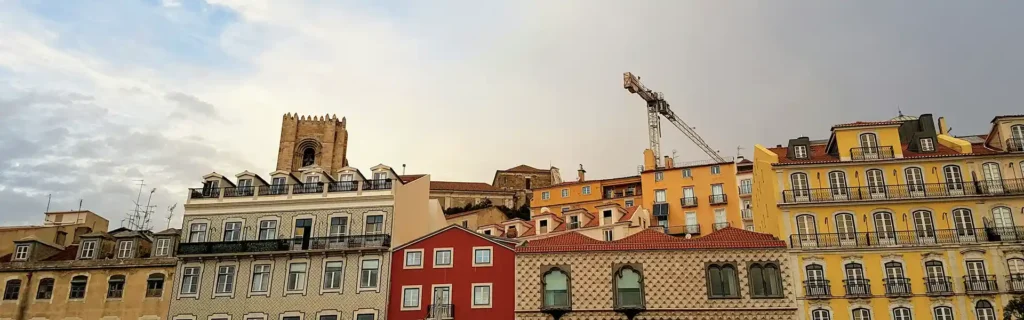
Lisbon’s neighborhoods differ more from each other than their small geographic separation suggests.
A 20-minute walk takes you from a medieval quarter with stepped streets to a gridded 20th-century district with elevators and parking, and the daily experience of living in those two places has little in common.
That’s why the useful question isn’t which area is best. It’s which area matches how you intend to use the city: Where you’ll travel each day, how much gradient you’re prepared to walk, what you need to reach within on a Tuesday evening, and what kind of building you want to live in.
The decision also sits alongside others if you’re moving to Portugal rather than only buying here. Residency status, tax position, and schooling all have their own criteria and their own timelines, and the right area can look different once those are settled.
- Specialist expertise in Portugal residency planning
- Trusted by 15,000+ clients worldwide
- Over a decade of advisory expertise
- Dedicated relationship manager
- Transparent fees and guidance
- Support beyond approval
