
Portugal’s best cities and towns to visit range from Lisbon and Porto to smaller heritage centers, coastal towns, and island escapes in Madeira and the Azores.
Lisbon suits first-time visitors who want history, museums, and nightlife in one place. Porto works well for travelers focused on wine, riverfront scenery, and a compact historic center.
The Algarve, represented here by Faro, is the base for beach-driven trips, while Évora, Guimarães, and Coimbra suit travelers prioritizing heritage and slower-paced exploration. Madeira and the Azores are for travelers seeking island landscapes, hiking, and a different pace altogether.
This guide covers 15 cities and towns across mainland Portugal and Madeira, plus the Azores archipelago. Each entry includes what it’s best for, how long to plan, how to get there, and what to do once you arrive, so you can build a trip around your own priorities.

There’s no single best city in Portugal. The right choice depends on what you’re planning the trip around. First visits usually start in Lisbon, and many add Porto. Beach trips center on Faro and the Algarve, heritage trips on Évora, Guimarães, or Coimbra, and nature-focused trips on Madeira or the Azores.
- First-time visitors and culture: Lisbon. Museums, historic neighborhoods, and the country’s main international airport.
- Wine, river views, and a compact center: Porto. The heart of Portugal’s second-largest metropolitan area, known for Port wine and its UNESCO-listed historic center.
- Beaches and family trips: Faro and the wider Algarve coast, or Cascais if you want beach access close to Lisbon.
- Heritage and slower travel: Évora, Guimarães, or Coimbra, each built around a different period of Portuguese history.
- Island landscapes: Madeira (Funchal as a base) for year-round mild weather, or the Azores for hiking and whale watching.
- Remote work or an extended stay: Ponta do Sol in Madeira, home to a small digital nomad community.
Four factors narrow the list: whether it’s your first visit, whether you’ll travel by train or by car, whether the trip centers on heritage or beaches, and when you’re traveling. Each one points to a different group of cities, and most itineraries combine two or three of them.
First visit or repeat visit? First-time visitors typically start with Lisbon, then add Porto or the Algarve depending on the length of the trip. Repeat visitors tend to look at Alentejo towns like Évora, the university city of Coimbra, or Madeira and the Azores.
City break or road trip? Lisbon, Porto, Coimbra, and Guimarães are well connected by train, so a car isn’t necessary if you’re moving between larger cities. Évora is also on the rail network, but the wider Alentejo countryside, the Silver Coast around Leiria, and rural stretches of the Algarve are easier with a car.
Culture or beach? Lisbon, Porto, Évora, Guimarães, and Coimbra are built around history and heritage. Faro, Cascais, and Ericeira are better suited to travelers prioritizing beach time.
Season? Coastal towns and the Algarve get considerably busier and more expensive from June through August. Spring and autumn offer milder weather with fewer crowds in Lisbon, Porto, and the Alentejo.
Most first trips to Portugal begin here. Lisbon is the country’s main arrival point, and Sintra, Cascais, and Ericeira are all within about an hour of the capital, which makes them easy day trips or short stays.
Farther north, Fátima, Coimbra, Aveiro, and Leiria sit between Lisbon and Porto and work well as stops when you’re traveling between the two cities.
Lisbon
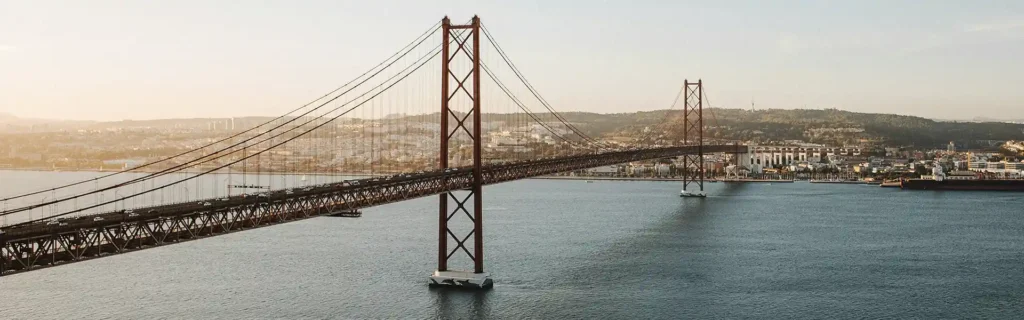
- Best for: First-time visitors, history, nightlife
- How long: 3–4 days
- Getting there: Lisbon Humberto Delgado Airport is Portugal’s main international gateway, with the airport connected to the city center by metro.
Lisbon is Portugal’s capital and its most visited city, blending centuries of history with a modern capital’s amenities. Streets in the historic core date to as early as the 12th century, and the city center sits across seven hills overlooking the Tagus River.
Lisbon’s cultural offering extends from Estrela Garden, laid out in 1852, to the Gulbenkian Museum, home to one of the more significant private art collections in Europe.
Top experiences:
- Belém: Visit the Belém Tower and Jerónimos Monastery, both tied to Portugal’s Age of Discovery, and try a pastel de Belém at the bakery that has made them to the monastery’s original recipe since 1837.
- Alfama: Walk the narrow streets of Lisbon’s oldest district, known for Fado music and hillside views over the river.
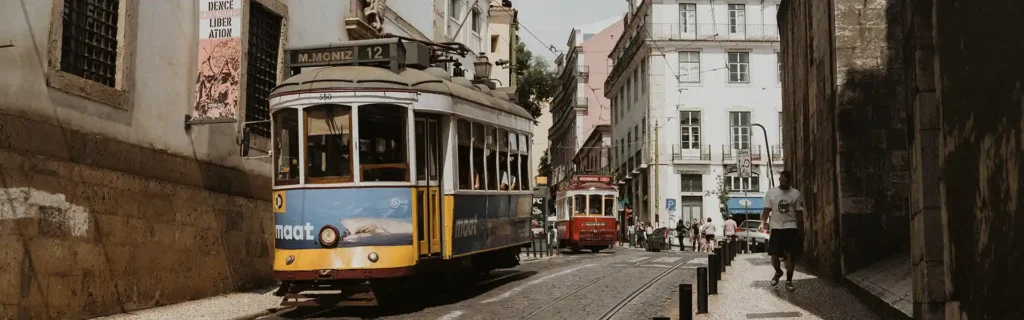
- Tram 28: Ride the historic tram line through several of Lisbon’s older neighborhoods, including Graça, Baixa, and Estrela.
- São Jorge Castle: Climb to this hilltop fortress, which dates to the Moorish period, for panoramic views over the city.
Sintra
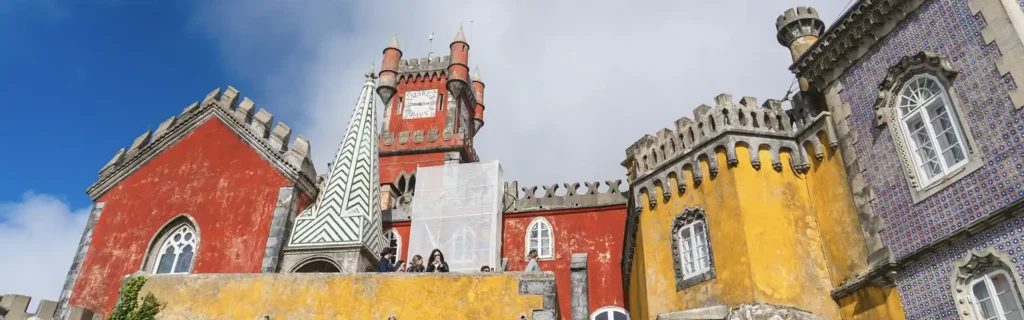
- Best for: Palaces, a day trip or short stay from Lisbon
- How long: 1–2 days
- Getting there: Regular trains run from Lisbon’s Rossio station, about 40 minutes each way. Local buses connect the town center to the palaces on the hillside above it.
Sintra is a town in the Lisbon district, once a summer retreat for the Portuguese royal family and now inscribed on the UNESCO World Heritage list as the Cultural Landscape of Sintra.
Top experiences:
- Pena Palace: Tour the colorful 19th-century palace set on a hilltop above the town, surrounded by gardens.
- Quinta da Regaleira: Explore the estate’s gardens and the Initiation Well, a spiral underground tower.
- Moorish Castle: Walk the fortress walls for views over Sintra and the Atlantic coastline beyond.
- Sintra National Palace: Visit the royal residence in the town center, recognizable by its conical chimneys.
- Cabo da Roca: A short drive from Sintra, this is the westernmost point of mainland Europe.
Cascais
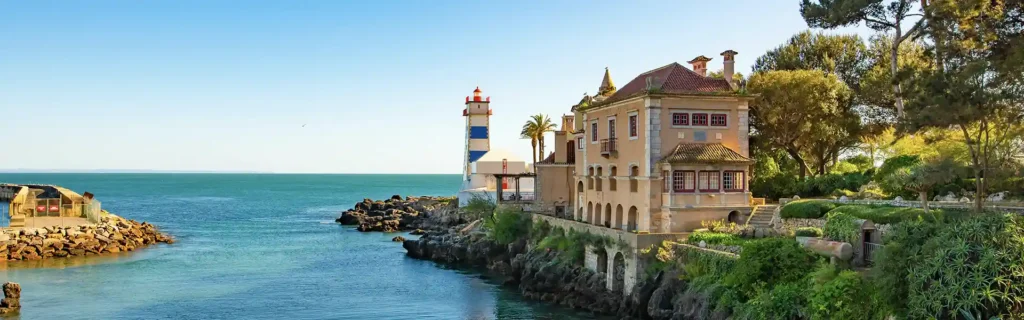
- Best for: Beaches close to Lisbon, families
- How long: 1–2 days
- Getting there: A direct train line runs from Lisbon’s Cais do Sodré station, with a journey time of roughly 40 minutes.
Cascais is a coastal town in the Lisbon district, situated where the Estoril Coast meets the Atlantic. It offers a string of beaches within walking distance of the town center, including Praia de São Pedro do Estoril, Tamariz Beach, and Praia da Rainha.
Top experiences:
- Boca do Inferno: See the rock formations and waves at this coastal chasm just outside the town center.
- Cascais Marina: Walk the marina, lined with waterfront restaurants and yachts.
- Museu Condes de Castro Guimarães: Visit this 19th-century palace turned museum, with art, antiques, and a library.
- Praia do Guincho: A wide beach popular for surfing and windsurfing, a short drive from the town center.
- Sintra-Cascais Natural Park: Hike or bike through the park’s mix of forest and coastline.
Ericeira
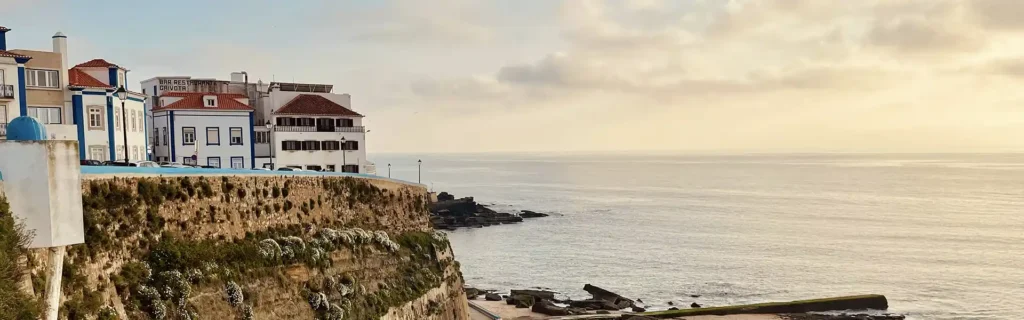
- Best for: Surfing and a slower-paced beach town
- How long: 1–2 days
- Getting there: Buses run from Lisbon’s Campo Grande terminal, roughly 45 minutes to an hour depending on traffic. A car gives more flexibility to explore nearby beaches.
Ericeira is a town on Portugal’s west coast, recognized as a World Surfing Reserve for its consistent waves. It has a more relaxed pace than the coastal towns closer to Lisbon.
Top experiences:
- Surfing: Ericeira’s reserve status covers several beach breaks suited to different skill levels.
- Fisherman’s Beach: A central beach lined with colorful boats and seafood restaurants.
- Mafra National Palace: A short drive away, this Baroque palace has an extensive library and basilica.
- Seafood: Try amêijoas à bulhão pato, a clam dish typical of the Portuguese coast.
- Coastal walks: Walking paths along the cliffs offer ocean views in both directions.
Fátima
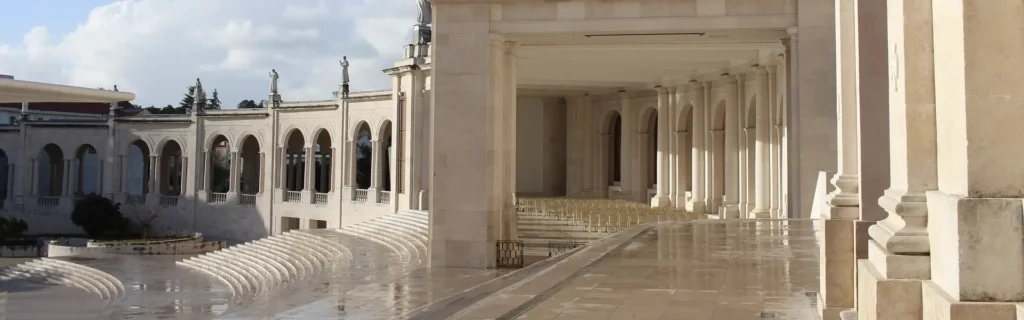
- Best for: Pilgrimage and reflection
- How long: Half a day to a full day
- Getting there: Fátima is about 125–130 km north of Lisbon, around a 1.5-hour drive via the A1 motorway. Rede Expressos buses run direct routes from Lisbon; the nearest train station, Chão de Maçãs-Fátima, is about 20 km from the town center and requires a taxi or connecting bus.
Fátima is one of the world’s most-visited Catholic pilgrimage sites, known for the Marian apparitions reported there in 1917. Visitors arrive year-round, and the largest pilgrimages take place on the 12th and 13th of each month from May to October. The May pilgrimage is the busiest of the year.
Top experiences:
- Sanctuary of Our Lady of Fátima: The sanctuary complex includes the Basilica of Our Lady of the Rosary and the more recent Basilica of the Holy Trinity.
- Chapel of the Apparitions: A small chapel marking the site associated with the reported apparitions.
- Basilica of the Holy Trinity: A modern basilica with seating for close to 9,000 people.
- Aljustrel: A short distance from the sanctuary, this village is where the three shepherd children lived.
Coimbra
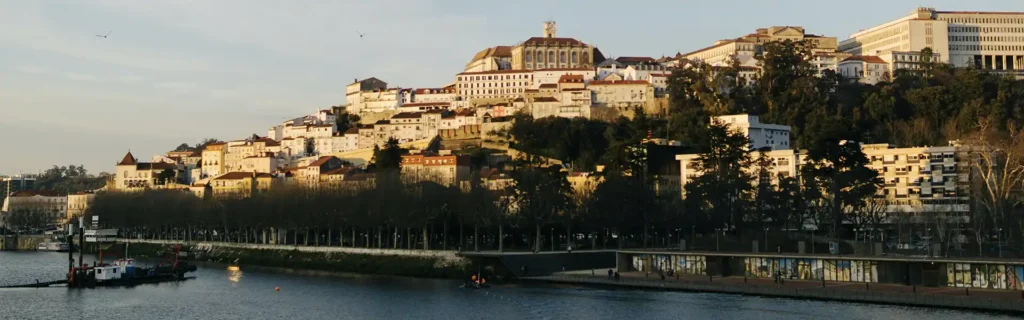
- Best for: University history and culture
- How long: 1–2 days
- Getting there: Regular trains connect Coimbra to both Lisbon and Porto, each roughly 2 hours.
Coimbra sits along the Mondego River and served as Portugal’s capital for over a century during the medieval period. It’s home to the University of Coimbra, one of Europe’s oldest universities, whose Alta and Sofia areas are inscribed on the UNESCO World Heritage list.
Top experiences:
- University of Coimbra: Tour the historic university, including the Joanina Library and its gilded interiors.
- Monastery of Santa Clara-a-Velha: Explore the Gothic ruins of this riverside monastery.
- Portugal dos Pequenitos: A park of miniature Portuguese landmarks, popular with families.
- Coimbra Old Cathedral: A Romanesque cathedral in the historic center.
- Quinta das Lágrimas: Gardens tied to the story of King Pedro I and Inês de Castro.
Aveiro
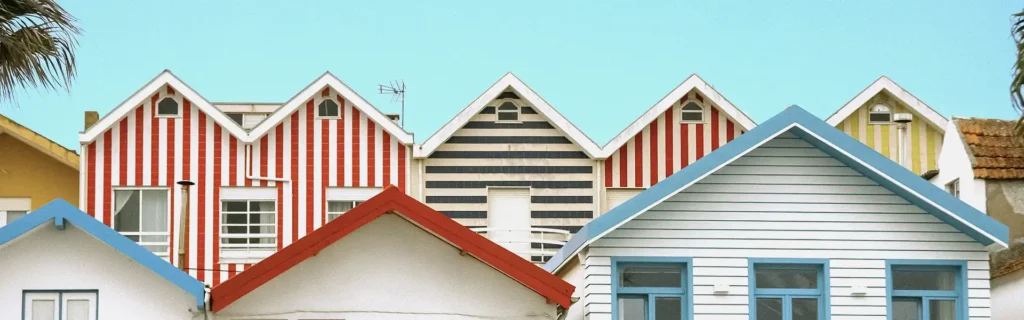
- Best for: Canals and a slower pace
- How long: 1 day
- Getting there: Aveiro is on the main rail line between Lisbon and Porto, roughly 45 minutes from Porto and just over 2 hours from Lisbon.
Aveiro is known for its network of canals and the colorful Moliceiro boats that travel them, along with Art Nouveau architecture in the town center.
Top experiences:
- Moliceiro rides: Traditional boat rides through the town’s canals.
- Costa Nova: A beachside village known for its striped houses, a short drive or bus ride away.
- Aveiro Museum: Housed in a 15th-century convent, covering the city’s history.
- Salt pans: Learn about the traditional salt production methods still visible around the lagoon.
- Ovos moles: A local custard-based sweet worth trying while in town.
Leiria
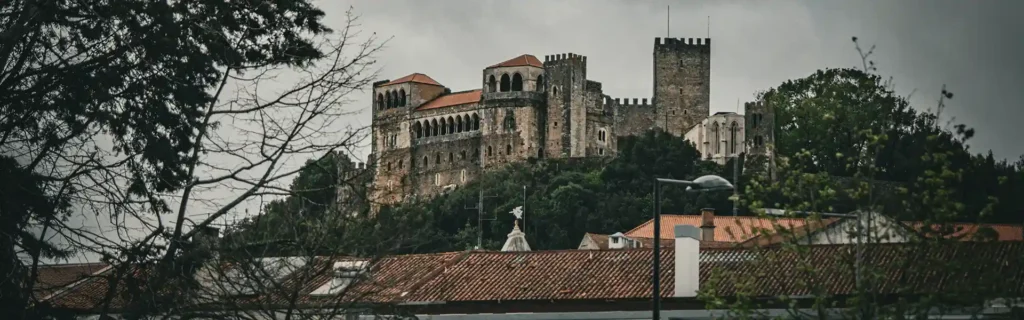
- Best for: A castle stop and access to the Silver Coast
- How long: 1 day
- Getting there: Leiria is on the main road and rail corridor between Lisbon and Porto, and it’s a practical base for day trips to the nearby Silver Coast.
Leiria is a city in central Portugal known for its hilltop medieval castle and proximity to the Silver Coast. It also has a sizable expat community drawn to the area’s relaxed pace.
Top experiences:
- Leiria Castle: A medieval castle overlooking the town, with views over the surrounding area. The castle is a national monument; it is not on the UNESCO World Heritage list.
- Praça Rodrigues Lobo: The town’s central square, good for a coffee stop.
- Lis River Promenade: A walking path along the river through town.
- Moinho de Papel: A restored paper mill, now a small industrial heritage museum.
Northern Portugal centers on Porto, which has its own international airport and works well as a base for the region. Guimarães is a straightforward day trip by train.
Viseu sits just south, in central Portugal’s Dão wine country, and has no rail link, so it fits best into a road trip or a longer stay.
Porto
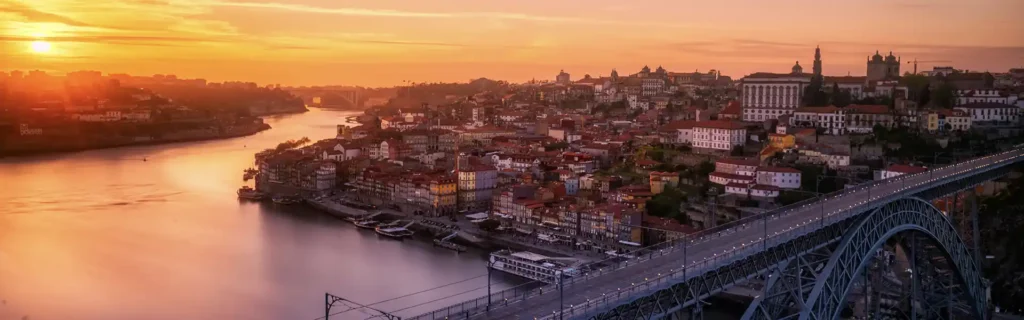
- Best for: Wine, river views, and a compact historic center
- How long: 2–3 days
- Getting there: Porto has its own international airport, Francisco Sá Carneiro, connected to the city center by metro.
Porto is Portugal’s fourth-largest city by population and its main city in the north, built along the Douro River. Its historic center, together with the Luís I Bridge and the Monastery of Serra do Pilar, is inscribed on the UNESCO World Heritage list.
Inland from the city, the Douro Valley is itself a UNESCO World Heritage-listed wine region, known for its terraced vineyards and as the origin of Port wine. You can find more detail in our things to do in Porto guide.
Top experiences:
- Ribeira District: Porto’s riverside district, with colorful buildings and cafés along the Douro.
- Livraria Lello: One of the more visually striking bookstores in Europe, a short walk from the nearest train station.
- Port wine cellars: Cross the river to Vila Nova de Gaia to tour the cellars where Port wine is aged.
- Clérigos Tower: Climb the 240-step tower for views over Porto’s rooftops and the river.
Guimarães
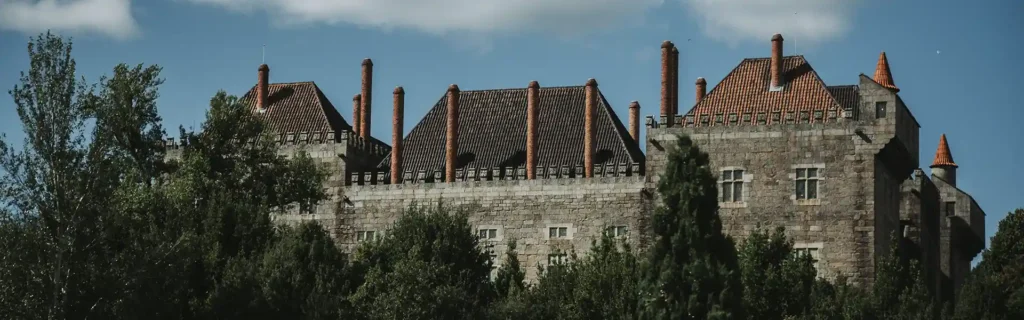
- Best for: Heritage and a day trip from Porto
- How long: 1 day
- Getting there: Regular trains run from Porto, with a journey time of around 50 minutes.
Guimarães is a historic city in the Minho region, often referred to as the birthplace of the Portuguese nation. Its historic center, including the Couros zone, is inscribed on the UNESCO World Heritage list.
Top experiences:
- Guimarães Castle: A 10th-century castle where, according to tradition, Portugal’s first king was born.
- Palace of the Dukes of Braganza: A 15th-century palace with period furniture, tapestries, and artifacts.
- Historic center: Squares including Largo da Oliveira and Praça de Santiago, lined with cafés and shops.
- Penha: Reachable by cable car or on foot, with parks and views over the city.
- Museu de Alberto Sampaio: Housed in the medieval buildings of the Collegiate Church of Nossa Senhora da Oliveira, with religious art and textiles from the region.
Viseu
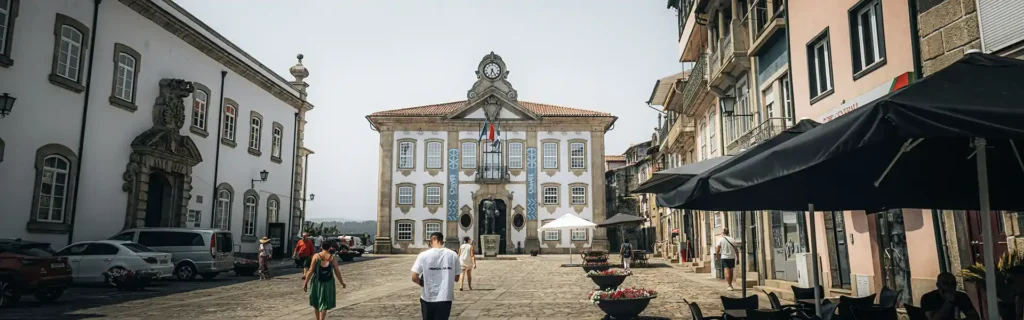
- Best for: Wine country and a slower pace
- How long: 1–2 days
- Getting there: Viseu doesn’t have a train station; it’s most practical to reach by car or intercity bus from Porto or Coimbra, both roughly 1.5 to 2 hours away.
Viseu is a city in central Portugal known for its historic center, built around the Sé Cathedral, and its proximity to the Dão wine region and the Serra da Estrela mountains.
Top experiences:
- Viseu Cathedral: A cathedral combining Gothic, Renaissance, and Baroque elements.
- Grão Vasco Museum: A collection that includes work by Vasco Fernandes, one of Portugal’s best-known painters.
- Rossio Garden: A central park in the heart of the city.
- Dão Wine Route: Visit local wineries producing Dão wines.
- Rua Direita: A historic pedestrian street lined with shops and cafés.
Southern Portugal covers two different kinds of trip. The Alentejo, with Évora as its main city, is built around heritage and open countryside.
The Algarve, reached through Faro, is the country’s main beach region. Both have direct trains from Lisbon, but a car makes it much easier to explore beyond the main cities in either region.
Évora
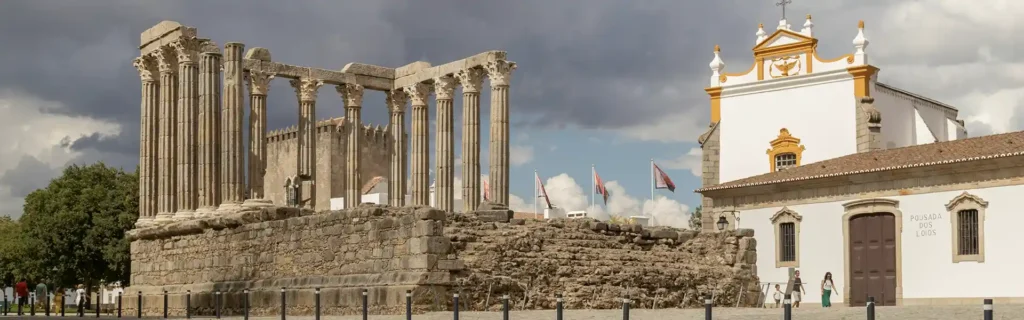
- Best for: Heritage and Roman history
- How long: 1–2 days
- Getting there: Direct trains run from Lisbon, taking around 1.5 hours. A car is useful if you plan to explore the wider Alentejo countryside.
Évora is a city in the Alentejo region with roots tracing back to Roman times. Its historic center is inscribed on the UNESCO World Heritage list, and its Roman Temple is a national monument.
Top experiences:
- Roman Temple: One of the best-preserved Roman ruins in Portugal.
- Capela dos Ossos (Chapel of Bones): A chapel lined with human bones, part of the Church of St. Francis.
- Évora Cathedral: A Gothic cathedral with rooftop access and views over the Alentejo countryside.
- Praça do Giraldo: The city’s main square, surrounded by cafés and historic buildings.
- Aqueduct of Silver Water: A Renaissance-era aqueduct running into the city.
Faro

- Best for: Beaches, families, and Algarve access
- How long: 2–3 days as a base
- Getting there: Faro Airport is the main gateway to the Algarve. Buses and taxis reach the city center in around 15 to 20 minutes. The airport has no rail link, but Faro’s train station, near the old town, has direct services from Lisbon taking about 3 to 3.5 hours. The drive from Lisbon takes around 2 hours 45 minutes.
Faro is the capital of the Algarve region, with an old town, an international airport, and easy access to the wider Algarve coast. The Spanish border is within an hour’s drive.
Top experiences:
- Cidade Velha (Old Town): Cobblestone streets within the old town walls.
- Ria Formosa Natural Park: A lagoon system reachable by boat tour, with wildlife and beaches.
- Faro Cathedral: A cathedral combining Gothic, Renaissance, and Baroque styles, with a climbable bell tower.
- Ilha Deserta: A short ferry ride to this uninhabited island, good for a quieter beach day.
- Municipal Museum of Faro: Housed in a restored 16th-century convent.
Madeira and the Azores are both autonomous regions of Portugal, and both require a flight from the mainland. Madeira, with Funchal as its capital, is known for mild weather throughout the year and hiking along its levada trails. The Azores suit a dedicated nature trip, with volcanic lakes, hot springs, and whale watching.
Funchal (Madeira)
- Best for: An island base with year-round mild weather
- How long: 3–4 days
- Getting there: Madeira Airport, about a 20-minute drive east of Funchal, has direct flights from mainland Portugal and several European cities.
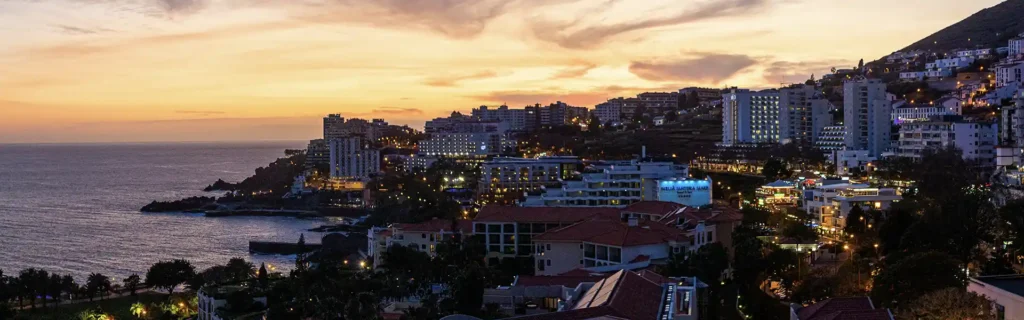
Funchal is the capital and largest city of Madeira, an autonomous region of Portugal in the Atlantic, off the northwest coast of Africa. The city is set against mountains that overlook the ocean.
Top experiences:
- Monte Palace Tropical Garden: Gardens with exotic plants and views over Funchal.
- Cable car ride: Travel from Funchal to Monte for panoramic views.
- Mercado dos Lavradores: A market for local produce, flowers, and crafts.
- CR7 Museum: A museum dedicated to footballer Cristiano Ronaldo, who was born on the island.
- Levada walks: Madeira’s network of irrigation-channel trails, suited to hiking through the island’s forests.
Ponta do Sol, Madeira
- Best for: Remote work and an extended, slower stay
- How long: Several days to several weeks
- Getting there: About 30 minutes by car from Funchal, or longer by bus.
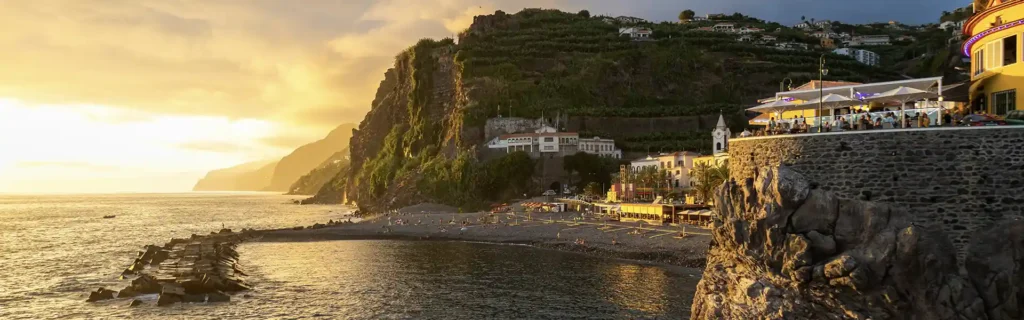
Ponta do Sol is a small town on Madeira’s south coast, known locally as one of the sunnier spots on the island. It’s home to Digital Nomads Madeira Islands, a project launched in February 2021 by the Regional Government of Madeira and Startup Madeira. The project offers a free coworking space for registered remote workers, with a broader community across the island.
Top experiences:
- Sunset views: The cliffs and beaches around Ponta do Sol are known for their sunsets.
- Ponta do Sol Beach: A pebble beach framed by cliffs.
- Walking trails: Hiking routes through the surrounding hills and valleys.
- Quinta da Rochinha: A historic estate with views over the coast.
- Church of Nossa Senhora da Luz: A historic church in the town center.
The Azores
- Best for: Hiking, whale watching, and island nature
- How long: 5–7 days to see two islands properly
- Getting there: The Azores are roughly 1,500 km west of mainland Portugal, reached by direct flights from Lisbon, Porto, or several other European cities, mainly to São Miguel.
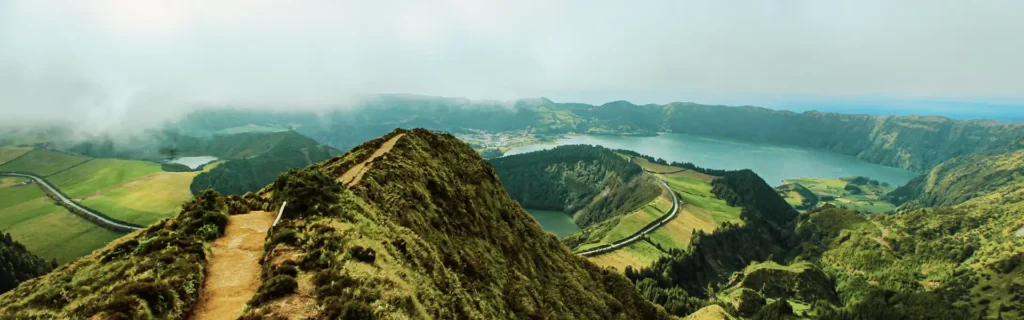
The Azores are an autonomous archipelago of nine volcanic islands in the North Atlantic. Two Azorean sites are on the UNESCO World Heritage list: the historic center of Angra do Heroísmo and the vineyard landscape of Pico Island. The islands are better suited to a dedicated nature-focused trip than a stop within a mainland itinerary.
Top experiences:
- Sete Cidades (São Miguel): A twin-lake volcanic crater, best viewed from the Vista do Rei lookout.
- Furnas Valley (São Miguel): Hot springs, fumaroles, and cozido, a stew traditionally cooked underground using volcanic heat.
- Pico Mountain (Pico Island): Portugal’s highest peak, with a demanding hike to the summit.
- Whale watching (Pico or Faial): Tours run for most of the year, with spring and summer the busiest season for sightings.
- Angra do Heroísmo (Terceira): A UNESCO-listed historic center with colorful architecture and fortresses.
- Lagoa do Fogo (São Miguel): A crater lake within a nature reserve, good for hiking and photography.
- Capelinhos Volcano (Faial): Volcanic terrain formed by a 1957 eruption, with an interpretation center on site.
The right trip length depends on how many regions you want to cover. Three days suit one city and a day trip, a week covers Lisbon and Porto, and up to two weeks leaves time for several mainland regions.
Madeira and the Azores need a flight, so they work best as separate trips or add-ons.
3 days: One city. Base yourself in Lisbon and add a day trip to Sintra or Cascais. This works well for a first, shorter visit or a stopover.
7 days: Two hubs plus a day trip. Spend 3–4 days in Lisbon, including a Sintra or Cascais day trip, then take the train to Porto for 2–3 days, with a day trip to Guimarães. Coimbra works well as a stop between the two if you’d rather break up the train journey.
10–14 days: A multi-region trip. Start in Lisbon (3–4 days, with Sintra and Cascais), continue to Évora for 1–2 days in the Alentejo, then head north through Coimbra (1 day) to Porto (2–3 days), with a Guimarães day trip. There’s no direct train from Évora to Coimbra, so a car is the simplest way to cover that leg, or you can take the train with a change in Lisbon. If time allows, extend the trip with a few days in the Algarve around Faro.
Portugal’s mainland cities are well connected by train and bus, which makes a car optional for a mainland-only itinerary focused on Lisbon, Porto, Coimbra, and Guimarães. Trains are usually the quickest way to travel between the larger cities. Buses cover places the rail network doesn’t reach well, and a car is most useful in the countryside and on the islands.
By train: Comboios de Portugal (CP) runs Alfa Pendular and Intercidades long-distance services connecting Lisbon, Porto, Coimbra, Aveiro, Évora, and Faro. Tickets for these trains include an assigned seat and must be bought before boarding. CP also runs urban and regional lines, including the Porto line to Guimarães. Check current routes and times at cp.pt before booking.
By bus: Rede Expressos and FlixBus run intercity routes across the mainland. Buses are often the more practical option for Fátima, Leiria, Viseu, and smaller towns, where rail stations are far from the center or don’t exist.
By car: A car is more useful for the Alentejo countryside, the Silver Coast around Leiria, Viseu, and the Dão wine region, and touring beyond the main towns in the Algarve. Madeira and the Azores need their own car rental, separate from a mainland trip. In the Azores, you’ll usually rent a car separately on each island you visit.
Portugal’s coast and larger cities get busiest and most expensive from June through August.
Spring (March to May) and autumn (September to October) bring milder weather and smaller crowds to Lisbon, Porto, and the Alentejo, and are generally considered the best shoulder-season windows for city-focused trips.
Winter is a reasonable time to visit Lisbon and Porto for a quieter, lower-cost trip, though some coastal towns scale back their tourist offerings outside of summer.
The south and the interior in summer: The Algarve’s beach season runs mainly from June to September, and the sea is usually at its warmest in August and September. Inland, the Alentejo gets very hot in July and August, so spring and autumn are more comfortable for exploring Évora and the surrounding countryside.
Rain in the north: Porto and northern Portugal get noticeably more rain than Lisbon, with most of it falling between October and March. That’s worth factoring in if you’re planning a winter trip to Porto, Guimarães, or Viseu.
The islands: Madeira’s weather stays mild year-round, making it a popular winter destination. In the Azores, conditions can change quickly in any season. Late spring and summer are the most reliable months for hiking and whale watching, though sperm whales live in Azorean waters year-round.
City festivals: Lisbon’s biggest street celebrations take place on the night of 12 June for Santo António. Porto’s take place on the night of 23 June for São João. Both cities are especially busy around these dates, and accommodation fills up early.
This guide focuses on visiting Portugal, but several of these cities and towns, including Lisbon, Porto, and Sintra, also come up often in conversations about relocating. Living in a city involves different questions from visiting it, such as housing, schools, healthcare, and which residency route fits your situation.
If you’re exploring that further, our guides on best places to live in Portugal, moving to Portugal, and living in Portugal go into more detail. For the wider picture, our Portugal relocation and mobility guidance brings the country’s residency and citizenship topics together in one place.
- Specialist expertise in Portugal residency planning
- Trusted by 15,000+ clients worldwide
- Over a decade of advisory expertise
- Dedicated relationship manager
- Transparent fees and guidance
- Support beyond approval
