
If you have considered living in Panama, you will be glad to know there are several visa options to choose from that cater to each person’s specific needs. Whether you are a retiree looking to apply for the Pensionado Visa, an investor interested in the Investor Visa, or a digital nomad, the country has an option for you.
At Global Citizen Solutions, we have worked with over 15,000 clients worldwide, and we know that the decision to relocate goes far beyond a visa. That is why we have created this guide to help you envision what life in Panama is actually like.
This guide covers the available visa options, the cost of living in Panama, taxes, opening a bank account, and other aspects of daily life, including transportation, schools, healthcare, and more.
Living in Panama: Key Takeaways

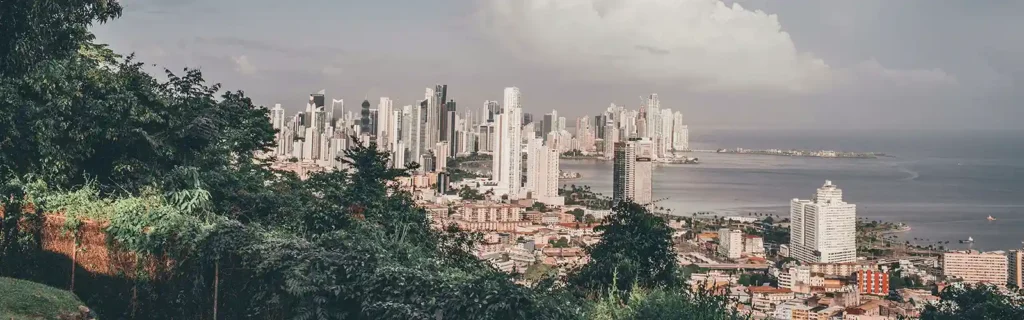
Panama is one of the more economically stable countries in Central America, helped by its use of the US dollar alongside the balboa, its official currency. The Panama Canal, a man made waterway connecting the Atlantic and Pacific Oceans, runs through Panama City, which offers a wide range of shopping, dining, private hospitals, and nightlife.
Outside Panama City, the pace is slower, from cooler mountain towns like Boquete to quieter coastal and rural areas. The climate is tropical and humid for most of the year, with a wet season from roughly May through mid-December and a busier, more expensive high season from late December through to March.
According to Numbeo (August 2026), monthly living costs excluding rent are about $780 for a single person and $2,840 for a family of four. Overall prices are around 35% lower and rent is around 43% lower than in the US.
- Retirees on a fixed income: Panama is particularly attractive for retirees. Its Pensionado visa grants permanent residency to people receiving a guaranteed lifetime pension of at least $1,000 per month, with no requirement to buy property or make an investment. A couple can live comfortably on $2,000–3,000 per month, which is relatively affordable compared with the US, Canada, or Western Europe.
- Americans and Canadians, specifically: Panama, have a long history of attracting retirees from North America. The latest official figures cited by the Migration Policy Institute showed the US-born senior population increasing from 491 in 1990 to 1,159 in 2000. While there has not been an official count equivalent to that since then, more recent estimates suggest that between 25,000 and 30,000 Americans, along with around 8,000 Canadians, now live in Panama. The country uses the US dollar and does not tax foreign income, making it easier for retirees to manage their finances without currency conversion or exchange-rate concerns.
- People looking for a simple residency option: Unlike many golden visa programs, Panama’s Pensionado visa is based on income rather than requiring a property purchase or large investment.
- Younger people with passive income: There is no minimum age requirement for the Pensionado visa. This means someone aged 45 with a qualifying lifetime annuity can apply just like a 70-year-old receiving a government pension. This can make the program suitable for early retirees, people with private annuities, or former military personnel with pensions.
- Remote workers and digital nomads: The Pensionado visa does not provide the right to work for a Panamanian employer. However, you can work remotely for a foreign company or run your own business while living in Panama. Those who want to work for a local employer would need to explore a different visa option.
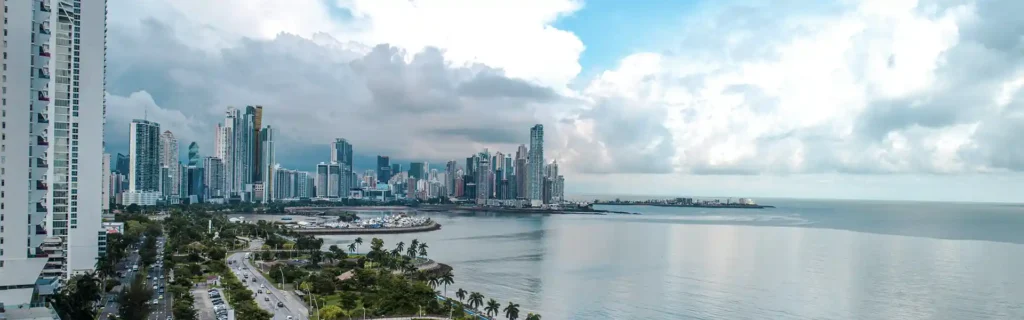
Panama is small, but its regions differ enough that “living in Panama” can mean very different things depending on where you land. Here’s what each of the country’s most popular expat destinations is actually like.
Panama City
Panama City is the country’s commercial and cultural center and attracts professionals, remote workers, and families who want the amenities of a major international city without leaving the tropics. It is home to the widest range of private hospitals and international schools, as well as the country’s main international airport and the most direct flight options to North America.
Living in Panama City means having access to shopping malls, several restaurants, museums, the historic Casco Viejo district, and the Panama Canal itself. Neighborhoods like El Cangrejo, Obarrio, and San Francisco put most of these attractions within walking or a short drive.
Boquete and the Chiriquí Highlands
Boquete is Panama’s largest and longest established expat community, loved for its spring-like mountain climate of around 18–25°C (65–77°F), which means air conditioning is rarely needed. Roughly a quarter of the town’s population is international, so English is widely spoken, and the expat social scene is active.
People in Boquete enjoy hiking through cloud forests, taking world-class coffee tours on the surrounding fincas, birdwatching, visiting farmers’ markets, and exploring a walkable town center with expat-run cafés and coworking spaces. It is popular with outdoor and nature-oriented people and is particularly well suited to retirees and remote workers.
Pedasí
Pedasí is on the southeastern tip of the Azuero Peninsula, and appeals to people who want beach access and a genuine small-town feel without Panama City’s pace. It is about a four- to four-and-a-half-hour drive from the capital and has a smaller, quieter expat community than in Boquete or Bocas del Toro.
Living in Pedasí comes with the joys of surfing and beach life around nearby Playa Venao, sportfishing, a walkable town center, and access to surrounding farmland for those who want more space or a rural, self-sufficient lifestyle.
Santa Fe
Santa Fe, in the central highland province of Veraguas, is one of the least discovered and most affordable expat destinations in Panama. It attracts people who want rural mountain living with minimal tourism development and has a small but tight-knit expat community.
There is plenty to do, including hiking through coffee and cloud forest country, visiting waterfalls, and enjoying a slower daily rhythm centered on the local market and town square. Larger cities like Santiago are also within driving distance for bigger shopping trips.
Bocas del Toro
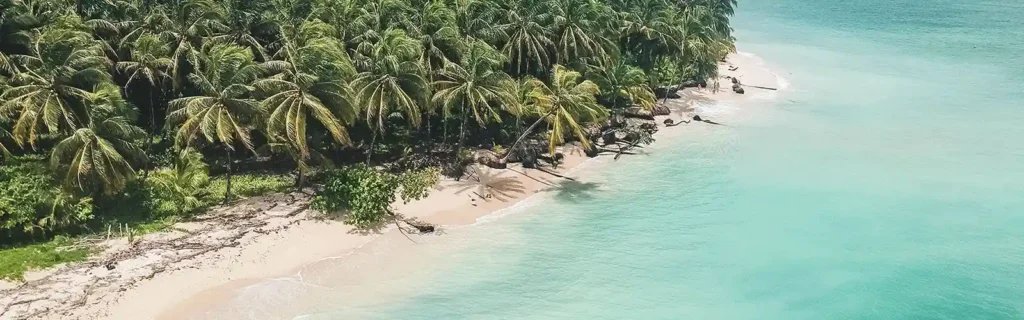
Bocas del Toro is a Caribbean archipelago town with a long-running expat community and a reputation as a tourism and digital nomad city. Its island setting, laid-back beach, jungle atmosphere, and lively social scene are what people love.
There are tons of activities to do, including diving and snorkelling, surfing, boat trips between islands, and enjoying the busy bar and restaurant scene in Bocas Town. Quieter beach or mangrove living is also available just outside the town. Many long-term residents settle away from the town center itself, on Isla Colón or a nearby island.
Advantages
- Dollar based transactions. The US dollar is legal tender alongside the balboa. This makes everyday banking and budgeting easier for US expats, although it does not protect residents from Panama’s wider economic conditions.
- Territorial tax system. Panama mainly taxes income earned from activities within the country rather than worldwide income. This can be a major advantage for many expats, as explained in more detail below.
- Established private healthcare: Panama City has several well regarded private hospitals, including Pacífica Salud Hospital Punta Pacífica, Hospital Nacional, Centro Médico Paitilla, and The Panama Clinic. Pacífica Salud Hospital Punta Pacífica is particularly notable for its Joint Commission International (JCI) accreditation and its affiliation with Johns Hopkins Medicine International, which supports international standards for patient safety and quality of care.
- International schooling options: Panama City has a strong selection of international schools, including International School of Panama (ISP), Balboa Academy, King’s College Panama, Metropolitan School of Panama, Lycée Français International de Panama, and The Oxford School. These schools offer American, British, IB, and French curricula, with several offering English-language instruction.
- Relatively short flights to North America. This makes visiting family and friends back home easier than from many other relocation destinations. However, flight routes and schedules change, so check current airline timetables before traveling.
Cons
- Cost of living varies and is rising. Panama is not as cheap as it once was, particularly for imported goods, air conditioning, and housing in Panama City. According to Panama’s Instituto Nacional de Estadística y Censo (INEC), inflation has eased, with Panama’s annual inflation rate falling to 1.8% in July 2026, down from 2.0% the previous month and its lowest level in three months.
- Traffic and limited public transport: Traffic can be a major issue in Panama City, especially during rush hour. Public transport is also less consistent outside the capital.
- The language barrier: Spanish is the main language across Panama. English is common in tourist areas and parts of Panama City, but it is not widely spoken everywhere.
- Bureaucracy: Visa, banking, and utility processes can involve more paperwork and longer waiting times than expats from North America or Europe may be used to.
Panama’s Pensionado visa is widely regarded as one of the easiest and most affordable retirement residency programs in Latin America. Applicants only need to prove a guaranteed lifetime income of at least $1,000 per month, plus $250 per dependent, from a pension, Social Security, military retirement, or private annuity. There is no minimum age requirement, so even early retirees living off a qualifying annuity can apply.
Once approved, it provides permanent residency rather than a visa that needs to be renewed. Applicants also receive practical benefits, including discounts of up to 50% on entertainment, dining, domestic flights, medical services, and utility bills.
These benefits, combined with Panama’s use of the US dollar and its territorial tax system, leave foreign-sourced pensions and retirement income untaxed. This explains why the Pensionado visa has become particularly popular with American and Canadian retirees.
Panama’s National Migration Service (Servicio Nacional de Migración) offers several distinct routes to residency, each built for a different kind of applicant, such as retirees, remote workers, or those bringing capital into the country.
Language
Spanish is Panama’s official language, and while English is common in tourist areas, international business districts, and parts of Panama City, it is not a reliable substitute for Spanish elsewhere. Learning functional Spanish materially improves housing searches, medical visits, banking, and everyday integration.
Transport
Panama City has modern infrastructure, but can have heavy traffic, especially during the 7–9 a.m. and 4–6 p.m. rush hours. Public transport is built around the Metro de Panamá and MetroBus/Mi Bus, both using the same reloadable Metro Card, which costs $2.00.
Metro fares are $0.35 on Line 1 and $0.50 on Line 2, while MetroBus fares range from $0.25 to $0.75. Reduced fares are available for students, seniors, and people with disabilities. With the Metro and MetroBus, it is possible to live in Panama City without a car.
For door-to-door travel, Uber, DiDi, and inDrive are commonly used, with Cabify also available. Outside Panama City, particularly in Boquete, Pedasí, and Santa Fe, most residents find having a car more practical. Fuel costs around $0.90–$0.95 per liter.
Healthcare
Panama has both public and private healthcare systems. The public system is tax-funded and available to residents, but most expats choose private healthcare. Panama City has several private hospitals with international accreditations and partnerships with US institutions.
A general practitioner visit typically costs $20–$50, while a specialist consultation costs around $50–$100, which is considerably less than similar care in the US.
Most expats have private health insurance to cover higher or unexpected medical costs. Plans cost $100–$300 per month, depending on age and coverage. Local Panama-only plans can start at around $30–$70 per month, while international plans with more coverage cost more.
Schools
International schools in Panama are concentrated mainly in Panama City, and competitive enrollment means some families need to apply months in advance. Costs and curricula vary widely:
Homeschooling is also a common alternative, particularly outside Panama City, where international school options are more limited and often limited to local bilingual or Spanish-medium schools.
Water
Tap water reliability varies by location, and some areas experience outages or water quality advisories. Where the supply is reliable, a typical monthly water bill is around $10–$30, although it can sometimes be included in rent or condo fees. New residents should check with the local water provider or municipal health authorities for their specific neighborhood rather than assuming water quality is the same across the country
The figures below are based on Numbeo’s 2026 data and assume a modest but comfortable lifestyle. This Numbeo data also gives a useful picture of everyday prices in Panama City, but the actual costs will vary depending on your neighborhood and lifestyle.

Taxes in Panama are one of the biggest attractions for expats, retirees, and investors. Panama uses a territorial tax system, meaning only income earned from sources within Panama is taxable, regardless of your residency or citizenship.
Foreign-sourced pensions, Social Security, offshore dividends, capital gains, rental income earned abroad, and income from remote work for a foreign employer or clients are generally outside Panama’s tax system. However, income earned from work or business activities in Panama is taxed under the country’s normal domestic rules.
Opening a Panamanian bank account typically requires:
- Proof of address, such as a utility bill
- A copy of your passport, a second form of ID, and your immigration entry stamp
- Proof of income, such as financial statements or recent tax returns
- Reference letters from a bank and a professional contact, such as an accountant or lawyer
The process commonly takes one to two weeks, though requirements will differ depending on the banks in Panama, and documentation needs to be provided in Spanish.
- Take an extended trial stay, ideally during both the dry and wet seasons, before choosing where to live.
- Choose a location based on your lifestyle, not just cost. Use the comparisons above as a starting point.
- Check your visa category against the Migration Service’s latest official requirements for your situation.
- Get insurance quotes in writing for your intended location. Do not assume healthcare will be universally free.
- Visit neighborhoods and properties in person before signing a long-term lease or buying a home.
- Get personalized tax and legal advice, as sourcing rules, business structure, and current substance requirements can affect how your foreign income is taxed.
- Trusted by 15,000+ clients worldwide
- Over a decade of advisory expertise
- Dedicated relationship manager
- Transparent fees and guidance
- Support beyond approval
