
Some countries with no property tax in 2026 include Bahrain, Monaco, Malta, the UAE, and Mauritius. These countries offer high-net-worth individuals a significant benefit by reducing their overall tax burden. Property tax is levied based on property value, making this an essential question for expats looking to invest in real estate abroad.
Our guide explores these countries to provide an understanding of what property tax is, what other taxes may be levied, the visa options available, and how Global Citizen Solutions (GCS) can help with your relocation goals.
Countries with No Property Tax: Key Takeaways


No property tax means that the local or national government of the country where you’re a tax resident does not charge an annual recurring fee based on the value of your property. So, you will not receive an annual tax invoice for owning a home, commercial building, or land.
Are there any hidden taxes that come with buying property?
Even with zero property taxes, you may still be liable for some taxes when you purchase, sell, or develop a property for rental income.
- Purchase taxes: These are one-time fees like stamp duty or property transfer taxes that apply when buying.
- Income taxes: Rental income earned from tenants remains subject to local income tax laws.
- Capital gains tax: This is triggered when you sell a property for profit.
While some countries may impose no annual tax for owning a property, you may still have to pay capital gains or purchase taxes.
1. Bahrain

In addition to having no annual property tax, Bahrain levies no personal income tax, capital gains tax, or withholding tax. However, property owners must pay a 10% municipal tax based on the property’s rental value.
The corporate tax rate is 0%, except for oil companies, which must pay 46%. This makes the West Asian nation a desirable location for investors, particularly those interested in property. However, there is a 15% domestic minimum top-up tax for in-scope multinational groups.
The Global Intelligence Unit’s most recent Investment Index ranked Bahrain 25th in the world. The factors used to rank the countries include the business environment, the economy’s strength, and the level of personal taxation. Note that foreigners can only purchase properties in designated freehold investment zones, such as Amwaj Islands, Juffair, and Seef.
2. Cayman Islands

The Cayman Islands does not impose any property or capital gains tax. The principal government transfer tax is a tiered one-time stamp duty of 7.5% if the property’s value is under CI$2 million (USD 2,400,000) and 10% if the property’s value is over CI$2million, as of 1 January 2026.
The nation offers different real estate residency pathways, such as the Cayman Islands Residency Certificate R41 and the Cayman Islands Permanent Residency by Investment R42. The R41 certificate lasts for 25 years, while the R42 certificate provides permanent residency.
The R41 certificate has a starting cost of CI $500,000 (~$600,000) on the Sister Islands, and the R42 CI $2 million (~ $2.4 million) is invested in developed residential or commercial real estate on Grand Cayman, Cayman Brac, or Little Cayman. Both programs require investment in developed residential real estate, making them ideal for international property investors.
3. Dominica
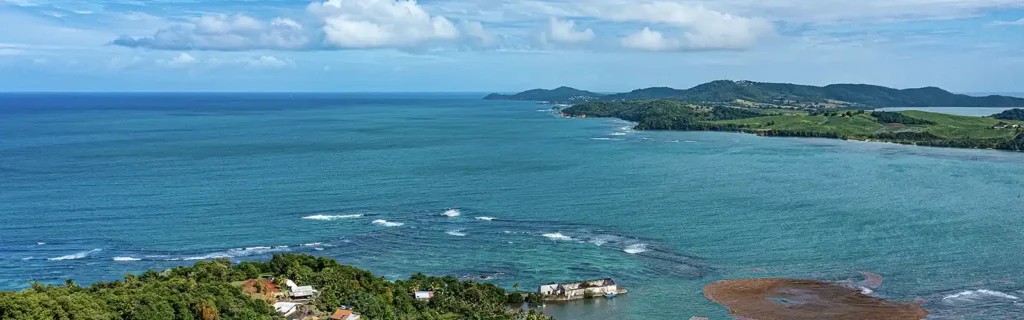
Dominica is a Caribbean nation that levies no national property tax and only a low municipal charge of 1.25% to 1.3% in certain areas such as Roseau and Canefield. Other than this, the nation does not tax inheritance, gifts, or capital gains.
Buyers must also pay buyer’s stamp duty at 2%, Assurance Fund fee at 1%, Judicial fee at 1%, and an Alien Landholding License fee of 10% where applicable.
The Dominica Citizenship by Investment program allows expats to gain citizenship in exchange for purchasing a unit in a government-approved real estate project with a starting cost of $200,000. The Dominica passport allows access to 161 countries visa-free, ETA, or visa-on-arrival, including the Schengen Area and China.
4. Cyprus
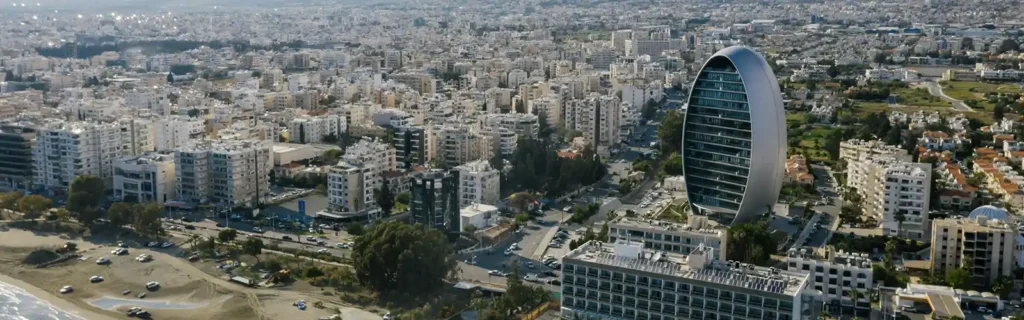
Cyprus abolished its national annual property tax in 2017, although municipal, community, and sewerage charges may still apply. Property transfer fees use progressive rates of 3% to 8%, subject to exemptions, while stamp duty was abolished for contracts signed from 1 January 2026. Capital gains from selling Cypriot property are taxed at 20%.
Foreigners can purchase property, although non-EU buyers require approval. A qualifying investment of at least €300,000 in approved assets can also support permanent residence applications, but this is subject to income and other eligibility requirements.
Cyprus ranks 39th on our 2026 investment index, with very high innovation indicators, making it a great economy for foreign investors.
5. Malta
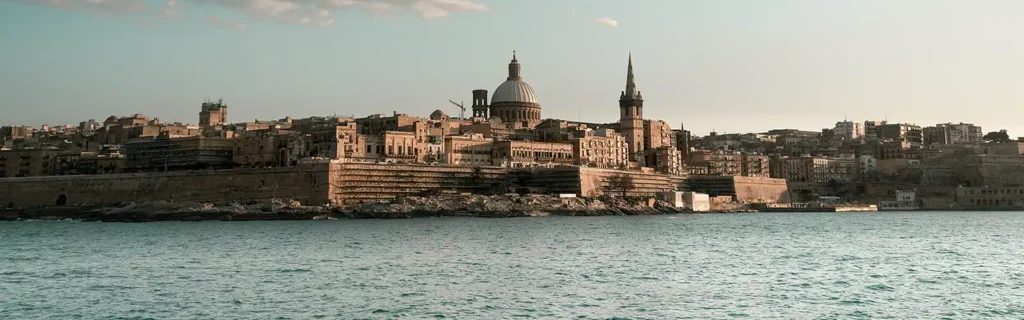
Malta is an EU member with English as one of the two official languages. The country does not have an annual property tax at either a municipal or national level. The only property tax that is paid is the 5% stamp duty for buyers, and the 8% final withholding tax for sellers.
This final tax can be reduced to as little as 2% if the property is a sole residence, sold within three years of purchase. Rental income in Malta can also be taxed under an optional 15% final gross-rent regime.
The Malta Residency by Investment program, also known as the Malta Permanent Residence Program (MPRP), allows expats to gain permanent residency in the country in exchange for a qualifying real estate investment.
Applicants can rent a property for at least €14,000 ($16,336) per year or purchase a property worth at least €375,000 ($437,588), along with a €60,000 ($70,014) administrative fee, €37,000 ($43,175) contribution, and €2,000 ($2,333) donation.
6. Mauritius

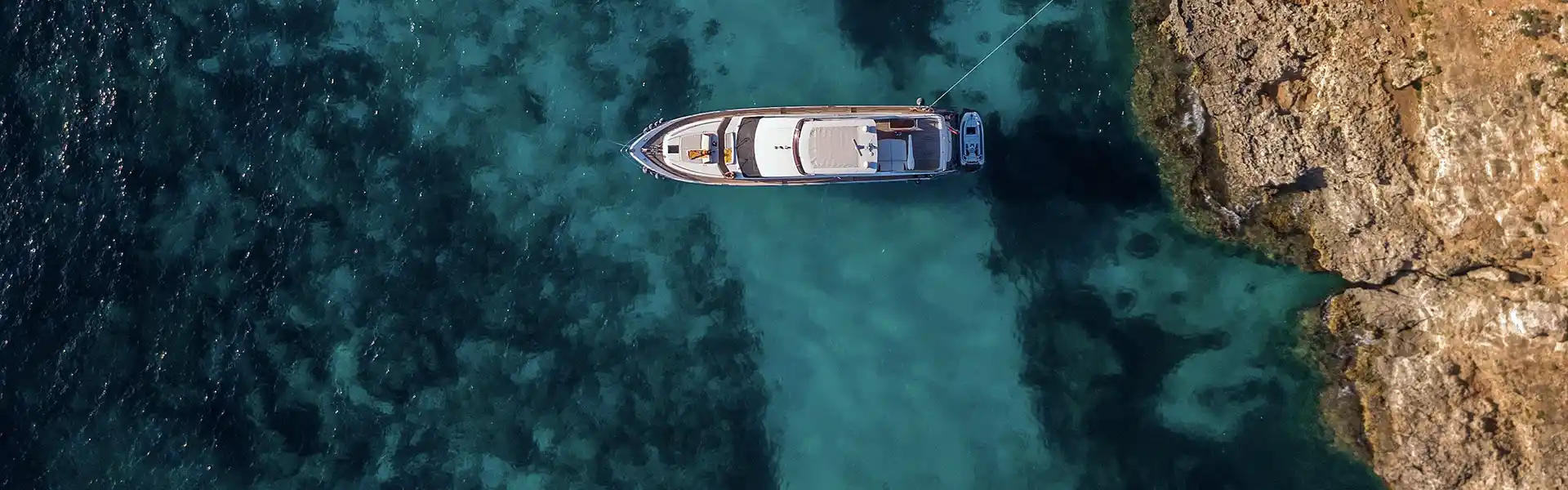
Mauritius is an African island nation, east of Madagascar, that has no annual property tax, or inheritance taxes. Buyers will need to pay a registration duty, which is 5% of the property’s purchase price or market value, whichever is higher.
The country has a residency by investment program that allows foreign nationals to invest $375,000 or more in qualifying schemes (like IRS, RES, PDS, or Smart Cities), which grants the buyer, their spouse, and dependent children under 24 permanent residency for as long as they own the property.
7. Monaco
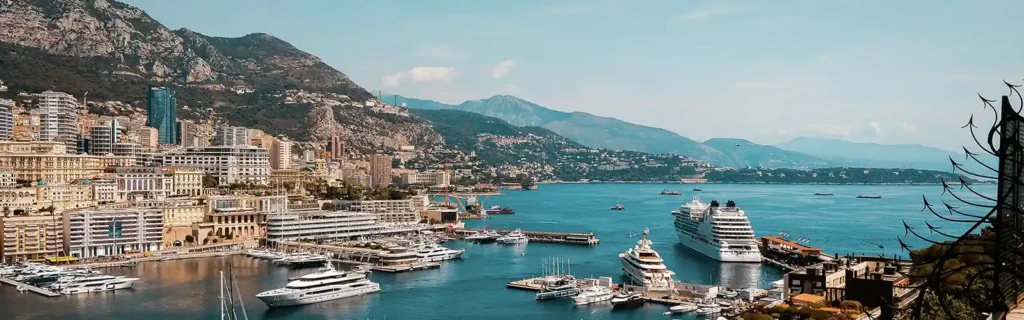
Monaco is a European principality on the French Riviera that does not impose an annual property tax or capital gains tax for most individuals. However, it imposes a property transfer duty levy for resale real estate ranging from 4.75% to 10% of the market value, depending on the buyer’s legal structure and disclosure compliance.
Additionally, the principality does not have a personal income tax except for French citizens. Monaco ranks 5th in the Investment Index, further demonstrating its appeal as a place to buy property.
The Monaco Residence Permit, also known as the Monaco Carte de Séjour, allows expats to live in the principality for more than three months per year. It requires individuals to deposit a minimum of €500,000 ($583,450) into a Monacan bank account to prove that they are financially self-sufficient.
8. Oman

Oman does not impose an annual property tax. In addition to this, individual property sales are not subject to capital gains tax. Rental income is not taxed but can attract municipal charges, and investors will need to pay a 3% stamp duty when purchasing property.
The country also has no personal income tax as of 2026. However, a newly promulgated personal income tax law is set to take effect from 1 January 2028. Note that foreigners can only purchase property in Oman in designated government-approved areas rather than nationwide.
9. Qatar

Qatar does not impose an annual property tax on residential or commercial land, and there is no capital gains tax from individual property sales. In addition, the country does not impose an inheritance or wealth tax. There is only a 0.25% property registration fee when purchasing a property.
Foreigners are allowed to purchase property in Qatar, but this is only permissible in certain zones like The Pearl, Lusail, and West Bay Lagoon. The country also has a residency by investment program, starting at QAR730,000 ($198,184) for property-based residence and QAR3.65 million ($990,920) for enhanced permanent-residency benefits.
10. Turks and Caicos Islands
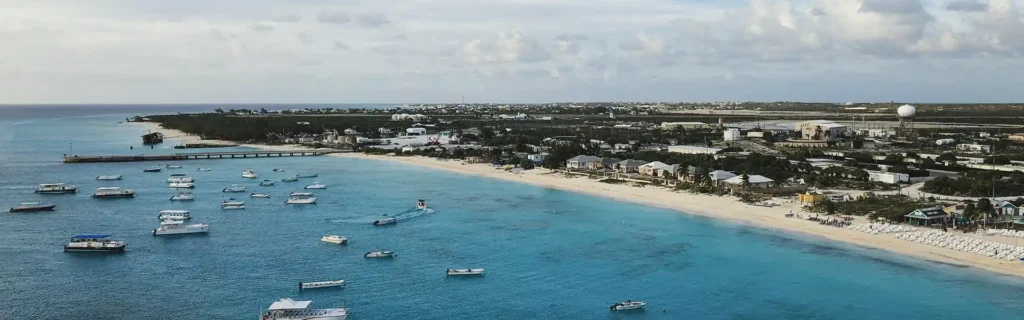
The Turks and Caicos Islands have no annual property tax, nor do they levy capital gains, income, or inheritance taxes on real estate. The islands place a stamp duty on property purchases ranging from 0% to 10%, depending on the location and the value. In Providenciales and other higher-rate islands, it rises through 6.5%, 8%, and 10% bands; other islands have different bands.
Foreigners can legally buy and own property in the Turks and Caicos Islands with a full freehold title and no special licenses or permits required.
11. United Arab Emirates (UAE)
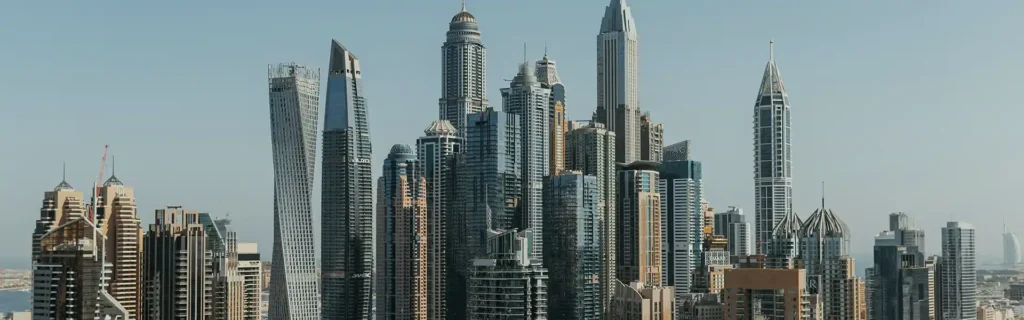
The UAE does not impose an annual property tax, nor does it tax personal income generated from residential properties. Dubai imposes a one time 4% transfer fee, which is payable to the Dubai Land Department on property purchase. Other emirates have different rules.
The Golden Visa UAE is a residency by investment program with a starting cost of AED 2 million (~$544,470) for the real estate option. The program provides investors with a renewable 5-year visa, and family members like spouses, children, and parents can be included as well.
12. Vanuatu
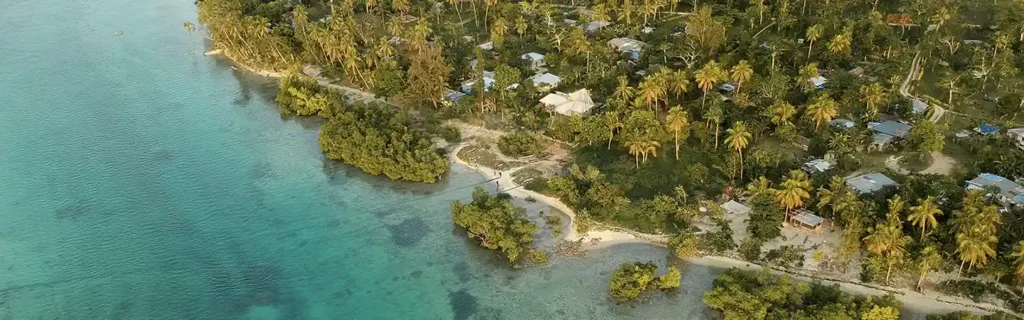
Vanuatu does not have an annual property tax, capital gains tax, personal income tax, or a wealth tax for real estate. What investors will need to be aware of is the upfront costs, as they will need to pay a 2% to 5% registration fee, stamp duty, which is 5% of the purchase price, and 15% VAT. Rental income is also subject to a 12.5% tax.
Foreigners can buy property in Vanuatu with no major restrictions.
The Vanuatu Citizenship by Investment program has a starting cost of $130,000 for the non-refundable donation option.
Without an annual property tax, countries legislate elsewhere for their tax revenue. Some of the most common taxes include:
- Transfer Fee or Stamp Duty: This is a one-time fee that countries will levy on the purchase of property. The usual range is between 1% and 10% of the property’s value.
- Capital Gains Tax: While there are some countries with no capital gains tax, it is common for nations to levy tax on the gain realized when property is sold. This is not always the case, as residency status, length of ownership, or use of the real estate can reduce or remove capital gains tax.
- Rental Tax: If an individual is going to rent out the property, then a tax on rental income may apply. This should be considered when planning an international property investment.
- Wealth or Municipal Tax: While there may be no national or federal property tax, there may still be municipal rates and taxes that need to be paid. Additionally, some nations levy a wealth tax on individuals above a certain net worth threshold.
- Value Added Tax: VAT can be added to the purchase price of real estate in certain jurisdictions, like Vanuatu. This increases the initial cost of purchasing property and is something that investors should be aware of.

Tax rules, ownership rights, and residence requirements can differ according to the buyer, location, property type, and ownership structure, so you must do your due diligence.
Before purchasing property, investors should:
- Confirm the tax position locally: Ask a qualified local tax adviser or notary to verify annual charges, purchase taxes, rental-income tax, and taxes payable when the property is sold.
- Check national and municipal rules: A country may have no national property tax while municipalities impose local rates, housing fees or similar charges.
- Verify ownership rights: Establish whether foreign buyers receive freehold, leasehold or usufruct rights and whether purchases are limited to designated areas.
- Calculate total ownership costs: Include service charges, land rent, insurance, maintenance, homeowners’ association fees and property-management costs.
- Review home-country taxation: Rental income and gains may remain taxable in the investor’s country of tax residence, even when the property’s jurisdiction does not tax them.
- Confirm residence-program requirements: Check whether the property must be government-approved, whether a minimum value or holding period applies, and whether additional fees or financial tests must be met.
- Assess exit risks: Consider resale demand, currency exposure, transfer restrictions, and taxes or fees payable when selling.
Tax rates and residence rules can change. Buyers should obtain current legal and tax advice before entering into a purchase agreement.
When investing in international real estate, it is important to weigh the advantages and the potential disadvantages so that an individual can find the best deal for their money.
Pros:
- Lower Recurring Costs: A lack of annual property tax means that investors will not need to worry about an increase in recurring costs. This is particularly beneficial for long-term investors, or investors with multiple properties.
- Increased Yields: Not having the additional expense of property tax means that income can increase. This is especially true in jurisdictions without property tax or capital gains tax.
- Other Tax Benefits: Countries with no property tax often offer other tax benefits like the lack of capital gains tax or no personal income tax. This compounds tax advantages and helps investors maximize their returns.
- Simplicity: Not having to worry about an annual evaluation and the subsequent taxes makes investing in real estate internationally that much simpler. Additionally, this can help to streamline the process and reduce compliance requirements.
- Residence or Citizenship Benefits: Some countries with no property tax also offer residency or citizenship by investment programs. Nations like Vanuatu offer citizenship by investment while nations like Malta and the UAE offer residency by investment. These programs have property as an investment option, meaning expats can increase their global mobility and residency rights through real estate investment.
Cons:
- Higher Initial Costs: Countries without annual property tax still tend to charge upfront costs like a transfer fee or stamp duty, potentially making the initial investment more expensive.
- Limited Infrastructure: Some nations that do not have property tax also do not have highly developed infrastructure.
- Foreign Ownership Restrictions: Certain countries like the UAE, restrict the areas in which foreigners can purchase property. Sometimes expats may also need to surmount more administrative hurdles before a property purchase.
- Trusted by 15,000+ clients worldwide
- Over a decade of advisory expertise
- Dedicated relationship manager
- Transparent fees and guidance
- Support beyond approval
